
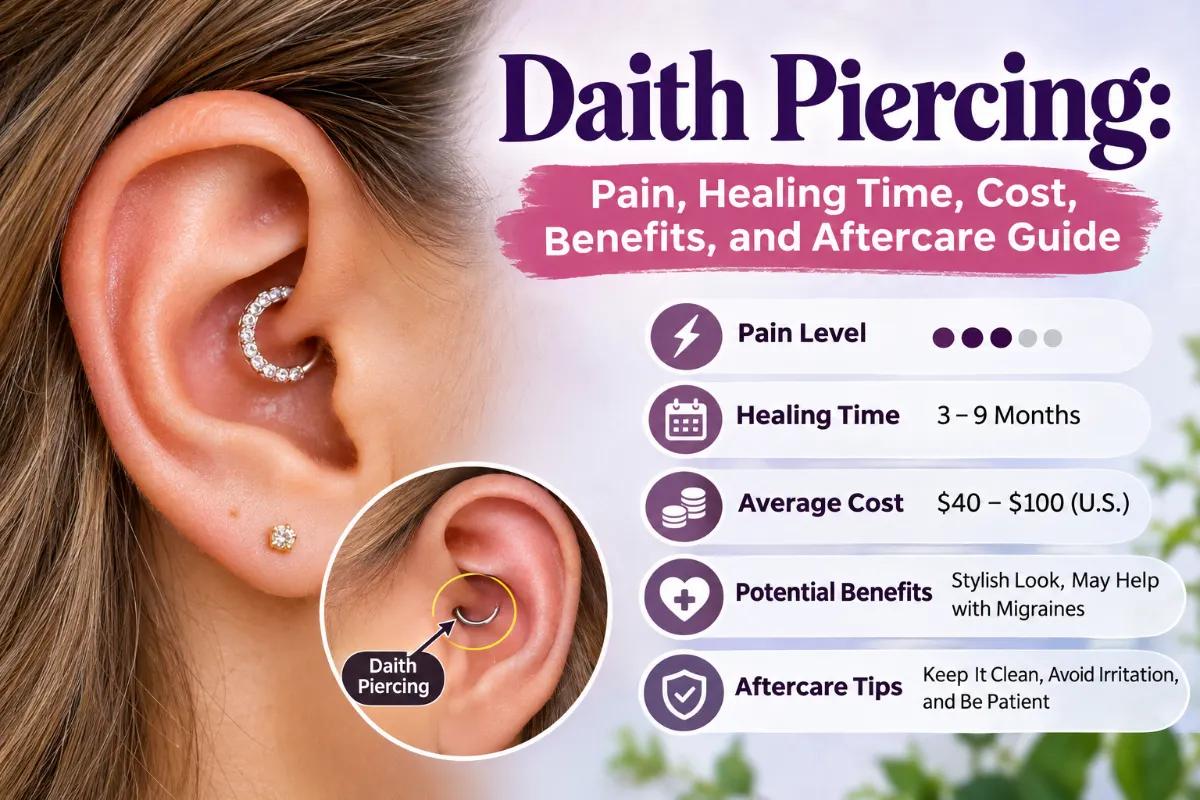
The Daith piercing is an option to have a fashionable inner ear cartilage piercing which is now gaining popularity with those who would like to find other options than the standard ear lobe jewelry. The location of the Daith piercing, the dainty hoop used, and its understated look, make it a great selection for anyone considering the latest trends in ear piercings.
The choice of a beautiful piece of jewelry is only part of what you need to do when considering having your ears pierced. Prior to scheduled appointments, it is essential that you learn about the amount of discomfort involved with this procedure, the length of time needed for your earlobes to heal from the piercing, potential problems associated with the procedure and the correct way to care for your pierced ears.
This guide will cover all aspects of getting a daith piercing in the U.S., such as average cost, available jewelry types, what to expect during the healing process, and if a daith piercing may provide relief from migraine headaches.
What Is a Daith Piercing?
A daith piercing is a piercing that goes through a small piece of cartilage in the ear, called the “daith,” which is the inner-most portion of the ear, directly above the ear canal.
In contrast to a traditional earlobe piercing, this is located within a thicker area of cartilage, therefore requiring additional healing time. Due to its position on the ear, a professional to perform the piercing is even more crucial.
The piercing typically uses a small ring which follows the shape of the ear. The appearance may be subtle or more obvious based upon each person’s unique anatomical structure.
Where Is a Daith Piercing Located?
The Daith is located in the Crus of the Helix, a cartilage fold located close to the center of the outside of the ear.
Because people’s ears are unique in terms of shape, some individuals do not possess the appropriate ear structure to allow for the use of this placement. A qualified piercing professional will be required to assess each individual’s ear prior to providing advice on whether or not the procedure can be performed.
How Painful Is a Daith Piercing?
The amount of pain experienced by each individual is different; however, many individuals experience a greater level of pain when they undergo a cartilage piercing compared to a standard earlobe piercing.
During the procedure, you will likely feel a brief pinch, and then there will be some pressure. The needle itself should go into your skin for only a couple of seconds.
While some individuals state that the experience is tolerable, others may find it uncomfortable due to the fact that the cartilage is quite thick.
What Affects the Pain Level?
Several factors influence how uncomfortable the experience feels:
- Individual pain tolerance
- Ear anatomy and cartilage thickness
- Piercer experience and technique
- Anxiety and muscle tension
- Existing irritation or sensitivity
Mild discomfort (pain), swelling and infrequent soreness may follow. On the other hand, severe or escalating pain is not a typical symptom of a healing process.
Daith Piercing Healing Time
The healing process for a Daith piercing can take anywhere from six to nine months, sometimes even longer, depending on each person’s unique body chemistry.
The lower blood supply to cartilage compared to the earlobe results in a slower rate of healing.
Even when the outside looks healed, the internal tissue may still be recovering.
Daith Piercing Healing Stages
| Healing period | What you may experience |
| First few days | Tenderness, mild swelling, and sensitivity |
| Weeks 1–4 | Gradually decreasing discomfort and occasional crusting |
| Months 2–3 | Less irritation, although the piercing remains delicate |
| Months 4–6 | Continued internal healing and reduced sensitivity |
| Months 6–9+ | Full healing may occur, depending on individual recovery |
These are approximate stages rather than a guaranteed schedule.
Do not change your jewelry just because your piercing has stopped hurting. Your piercer will be able to tell you if the piercing is healed enough.
Daith Piercing Aftercare: How to Heal Safely
Proper aftercare helps reduce irritation and lowers the risk of complications.
The Association of Professional Piercers suggests being careful when cleaning a new piercing and avoiding extra contact with the area that is healing.
Essential Aftercare Tips
- Use only sterile saline: Select a pre-packaged 0.9% sodium chloride wound washing solution that does not contain other additives.
- Keep your hands clean: Wash them before touching the area when necessary.
- Avoid rotating jewelry: Twisting or moving the ring can irritate healing tissue.
- Limit pressure: Avoid sleeping directly on the pierced ear.
- Keep your accessories clean: Be careful about using earbuds, headphones, and other items that come into contact with the piercing.
- Dry gently: Use clean disposable gauze or another suitable disposable product.
Avoid Hydrogen Peroxide, Rubbing Alcohol, Harsh Anti-bacterial Products, and Homemade Salt Mixtures; as they may cause irritation to your wound and/or impede the healing process.
Rather than removing the jewelry yourself if you believe there is an infection, obtain professional health care.
How Much Does a Daith Piercing Cost in the USA?
The average cost of getting a daith piercing in the U.S. can range anywhere from 40-100 (or more), based upon what the studio charges for the piercing, where you live, the type of jewelry you select, and other services that might be offered by the studio.
This is a general budgeting estimate, not a verified nationwide average.
Factors That Affect Pricing
- Studio location: Shops in major metropolitan areas may charge more.
- Piercer experience: Established professionals may have higher service fees.
- Jewelry material: Implant-grade titanium and solid gold can increase the total.
- Jewelry design: Decorative rings and gemstone settings may cost extra.
Prior to booking, inquire if the stated price includes jewelry, consultation and all required taxes.
It is far more important to choose an established studio that has proper sanitization procedures than it is to find the cheapest studio.
Does a Daith Piercing Help With Migraines?
Many people believe that a daith piercing can help alleviate the pain caused by migraines.
This idea has sometimes been associated with acupuncture theory as well. In acupuncture, the “ear” (pinna) is believed to have multiple treatment points that correspond to various parts of the body. One of these treatment points, which is believed to be located on the outer edge of the ear, has been linked to several other forms of alternative medicine.
However, there is no reliable clinical data which supports the claim that Daith Piercings can either prevent or treat migraines.
An individual’s report of improvement does not provide evidence that a treatment is effective. Improvements reported by individuals may be due to a “placebo effect,” normal variations in how often someone experiences migraines, or other variables.
The American Migraine Foundation provides education and treatment options based upon evidence regarding migraines.
Individuals who have chronic migraine issues need to seek help from a health care provider instead of using piercings as a method of treating those problems.
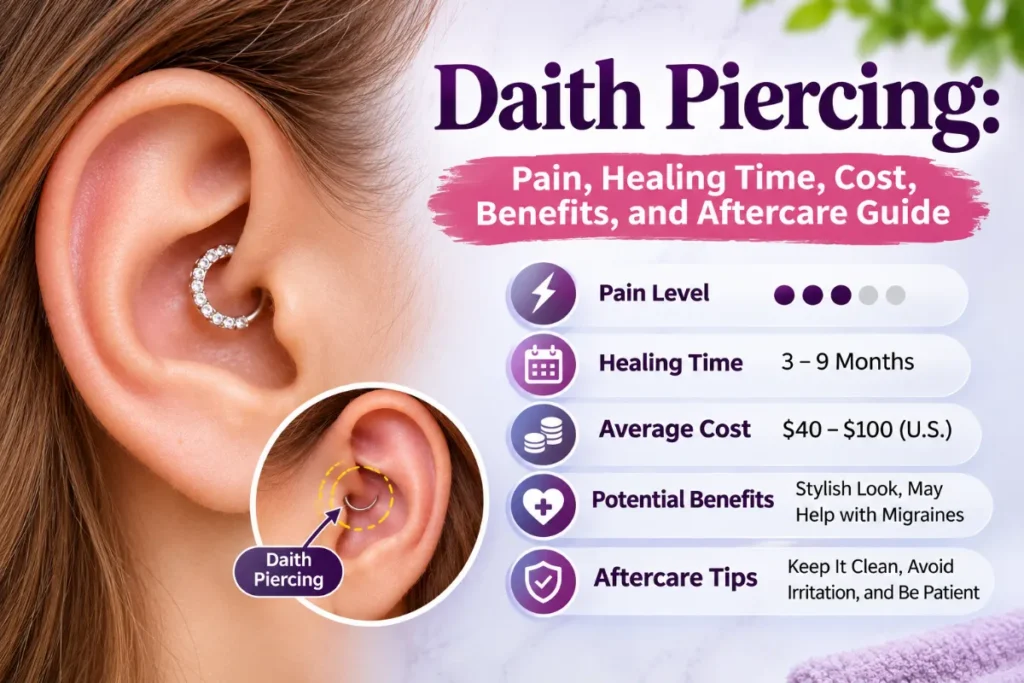
Best Jewelry Options for a Daith Piercing
Jewelry selection affects both appearance and comfort.
For the first time you get your ears pierced, you will need to find the correct size and quality of jewelry. This is especially true as using poor quality materials or jewelry that fits too tightly can result in irritation.
Popular Jewelry Styles
- Captive Bead Rings: circular rings held in place by a removable bead. These offer a timeless look.
- Circular Barbells: A horseshoe shaped piece of jewelry with interchangeable ends that provide a somewhat alternative style.
- Seam rings: These are simple, round shaped earrings that could work for you after your ear has completely recovered from the piercing.
- Decorative clicker rings are hinged rings that come in many different designs. They are typically used for well-healed piercings.
Professional body piercing uses materials such as implant grade titanium, certified implant grade steel and suitable solid gold.
The professional that pierces you must choose the right style, size (diameter), and type of metal (or other materials) for both your anatomy and your present state of recovery.
Potential Risks and Complications
Like other cartilage piercings, a daith piercing carries certain risks.
Possible issues include an infection, long-term swelling, irritation-caused bumps, allergic reactions, and scars.
Sometimes cartilage infections can be very dangerous and will need immediate medical attention.
Watch for symptoms like an increase in redness, a noticeable increase in temperature (warmth), an worsening of your pain, the spread of your swelling, a fever or a thick discharge.
The Cleveland Clinic has health resources related to problems with piercings, including infection.
Seek medical evaluation promptly if concerning symptoms develop.
Read also: Daith Piercing
Frequently Asked Questions
Can I sleep on my daith piercing?
Avoid sleeping directly on a new piercing. Pressure and friction can increase irritation and delay healing. Sleeping on the opposite side or using a pillow with an ear opening may help.
When can I change my daith piercing jewelry?
Wait until the piercing is fully healed and professionally assessed. Healing often takes 6–9 months or longer. A piercer may perform an earlier jewelry adjustment if medically or mechanically necessary.
Can a daith piercing become infected?
Yes. Cartilage piercings can develop infections, especially when exposed to contamination or repeated irritation. Increasing pain, warmth, swelling, or unusual discharge warrants medical attention.
Can I wear earbuds with a daith piercing?
Earbuds may press against the jewelry and irritate the healing area. Avoid devices that touch or compress the piercing until your piercer confirms they can be used comfortably.
Is a daith piercing suitable for everyone?
No. Some ears lack the cartilage structure needed for safe placement. A professional piercer should evaluate your anatomy and explain whether another piercing would be more appropriate.
Final Thoughts
A daith piercing can be an attractive addition to your ear jewelry collection, but it requires patience and consistent care.
Understanding the healing timeline, selecting quality jewelry, and choosing an experienced professional can help reduce avoidable complications.
If you’re considering this piercing, prioritize safety and realistic expectations over trends. Its appearance may be appealing, but claims about migraine relief should not influence medical treatment decisions.