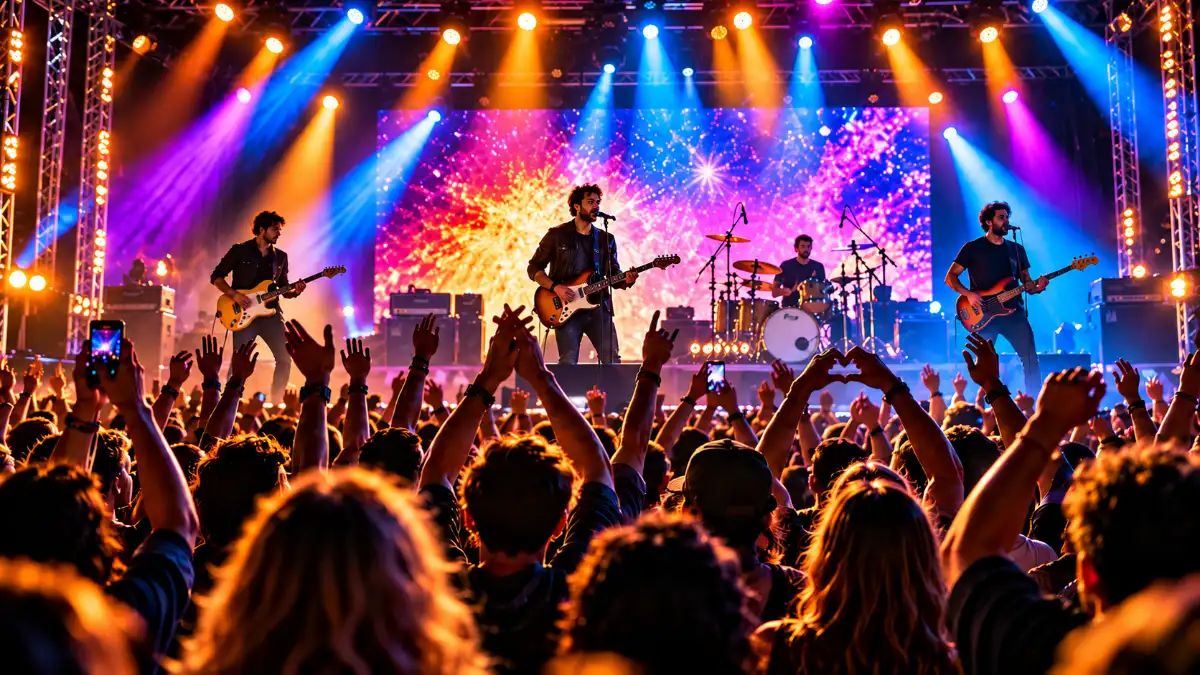
Concerts are live music events where singers, bands, DJs, orchestras, and other performers entertain audiences at clubs, theaters, arenas, stadiums, and outdoor venues. To find upcoming concerts, search by city, artist, or date using official venue calendars and trusted concert discovery platforms. Before booking, confirm the performer, event date, venue, ticket prices, seating arrangements, and authorized ticket seller. Concerts include pop, rock, hip-hop, classical music, acoustic performances, electronic dance music, and multi-day festivals. Whether you’re attending your first show or following a favorite artist on tour, understanding ticket booking, venue rules, seating options, and safety precautions can help you enjoy live music while staying within your budget.
Editorial Note: This guide provides general information about concerts, ticket booking, prices, and live music events. Concert schedules, ticket availability, and prices can change. Always verify event-specific details through official artists, venues, and authorized ticket sellers.
How to Find Upcoming Concerts Near You
Finding upcoming concerts usually begins with three details: your location, the dates you’re available, and the artists or musical genres you enjoy.
Searching for “concerts near me” can help you identify nearby performances. More specific searches, such as “concerts this weekend in Mumbai” or “rock concerts in London,” can narrow the results.
Best Websites to Find Concerts
Several established platforms provide concert discovery and ticketing information.
| Concert Platform | What You Can Find |
| Bandsintown | Artist tracking, concerts by location, and event discovery |
| Songkick | Artist tour schedules and local performances |
| Ticketmaster | Concert listings, tickets, and seating options |
| Live Nation | Touring artists and live entertainment |
| BookMyShow | Music concerts and entertainment events in India |
Available events and booking options depend on the country, city, artist, and platform.
Official artist websites and local venue calendars are also useful sources, particularly for performances that may not appear on every major ticketing service.
Find Concerts by City and Location
Location-based searches help you identify events within a convenient traveling distance.
Examples include concerts in Mumbai, Delhi, Bengaluru, New York, and London.
These are location-search examples, not announcements of confirmed upcoming performances.
After choosing a city, compare the venue address, concert date, available tickets, and transportation options.
Find Concerts by Date or Weekend
If your schedule is limited, search for concerts tonight, concerts this weekend, or upcoming concerts this month.
Use date filters on concert platforms to narrow your options.
Always verify the event’s latest official listing before booking because schedules may change.
Find Concerts by Artist or Band
If you’re interested in a specific singer or band, check the artist’s official tour page.
Look for announced cities, confirmed dates, venue information, and ticket release details.
Verified social media accounts and official newsletters may also provide tour announcements and presale information.
How to Compare Upcoming Concert Events
Choosing between concerts becomes easier when you compare the practical details that affect your experience.
| Information | What to Verify |
| Artist | Confirm the scheduled performer or lineup |
| Date | Check the confirmed performance date |
| Venue | Verify the address and accessibility |
| Tickets | Check available categories |
| Price | Compare the final cost, including fees |
| Start time | Review opening and performance times |
| Entry rules | Confirm age restrictions and prohibited items |
| Booking | Use an authorized ticket seller |
A useful event listing should show verified artist names, dates, venues, and official booking information.
If you’re looking for current events, use a concert platform or a regularly updated local event calendar rather than relying on an old announcement.
Different Types of Concerts
Concerts vary according to music genre, venue size, audience expectations, and performance style.
Stadium and Arena Concerts
Major touring artists often perform in stadiums and large indoor arenas.
These concerts may feature extensive lighting, video screens, large stages, and thousands of attendees.
Stadium performances provide a large-scale atmosphere, while indoor arenas generally offer protection from outdoor weather.
Pop, Rock, and Hip-Hop Concerts
Pop concerts may combine vocals, choreography, and visual effects.
Rock concerts often emphasize guitars, drums, powerful vocals, and audience participation.
Hip-hop shows may feature rappers, DJs, guest performers, and direct crowd interaction.
The actual atmosphere depends on the artist and the production.
Acoustic and Small-Venue Concerts
Acoustic concerts typically emphasize vocals and instruments without relying heavily on elaborate visual effects.
Small venues such as clubs, cafes, and theaters can create closer connections between performers and audiences.
They also provide opportunities to discover independent musicians.
Classical Music Concerts
Classical concerts may feature orchestras, instrumental soloists, choirs, or chamber ensembles.
These performances often emphasize musical composition, technique, and interpretation.
They commonly take place in theaters and concert halls.
EDM Concerts and Music Festivals
Electronic dance music concerts often feature DJs, electronic production, synchronized lighting, and visual effects.
Music festivals generally bring together several performers, sometimes across multiple stages and days.
Festival visitors may need additional planning for transportation, accommodation, weather, and food.
How to Buy Concert Tickets Online
Buying concert tickets is straightforward when you follow an authorized booking process.
- Find the official event page. Visit the artist’s website, venue, promoter, or authorized ticketing service.
- Select the date and city. Confirm the correct performance and location.
- Choose your ticket category. Compare general admission, reserved seating, standing areas, and VIP packages.
- Review the seating chart. Check stage visibility, restricted views, and accessible sections.
- Check the final price. Include service fees, taxes, and additional charges.
- Complete payment securely. Use the supported checkout process.
- Save your confirmation. Review mobile ticket delivery and entry requirements.
Some concerts offer official presales before general ticket sales begin.
However, presale access does not guarantee availability or lower ticket prices.
How to Avoid Fake Concert Tickets
Ticket scams may involve counterfeit tickets, misleading advertisements, or sellers who do not possess the tickets they advertise.
Purchase through official ticketing platforms or authorized resale services whenever possible.
Be cautious when unknown social media accounts offer unusually cheap tickets or request payment outside a recognized platform.
Confirm the seller’s website address and review available buyer protections before making payment.
Concert Ticket Prices: What Affects the Cost?
Concert ticket prices vary depending on the artist, venue, seating category, location, and demand.
There is no universal ticket price for live music events.
| Pricing Factor | Effect on Ticket Cost |
| Artist popularity | High-demand performers may charge more |
| Seating location | Premium viewing areas often cost more |
| Venue capacity | Ticket availability depends partly on capacity |
| VIP packages | Additional benefits increase the price |
| City and location | Operating costs and demand vary |
| Resale market | Prices may differ from the original face value |
Some small local concerts are free or relatively inexpensive, while premium packages for major international tours can be substantially more expensive.
Read Also: NBA Young Boy Concert: Current Tickets, Next Date and 2026 Status
Example: Planning a Concert Budget
Consider a hypothetical concert ticket priced at $80.
| Expense | Estimated Cost |
| Concert ticket | $80 |
| Booking fees | $12 |
| Transportation | $20 |
| Food and drinks | $18 |
| Estimated Total | $130 |
These amounts are illustrative and do not represent actual pricing for a particular event.
Planning your overall budget helps account for expenses beyond the ticket.
How to Choose the Best Concert Seats
The best concert seat is not always the most expensive one. Your choice should depend on stage visibility, comfort, proximity, and budget.
Floor seating or standing areas may provide closer views, but other attendees can obstruct your sightline.
Lower-level reserved seats often balance stage visibility with comfort.
Upper-level seats may offer a wider perspective of the stage production and sometimes cost less.
General admission commonly provides access to a designated area without assigned seats.
VIP tickets may include premium viewing, merchandise, dedicated entry, or hospitality services, depending on the package.
Choosing Seats Based on Your Priorities
If seeing the entire stage is important, an elevated position may be preferable to standing close to the performers.
If proximity matters most, floor tickets may be more appealing.
Always compare the official seating chart, restricted-view notices, and final ticket price before booking.
Actual visibility depends on the stage configuration and venue layout. For accessible seating, review the venue’s official accommodation information.
How to Prepare for Your First Concert
Preparing in advance makes attending a live music event easier.
Before the Concert
Confirm the venue, event date, entry time, and transportation arrangements.
Wear comfortable clothing and footwear, particularly if you expect to stand for several hours.
Check the venue’s rules concerning bags, cameras, food, drinks, and portable chargers.
Keep your ticket accessible and bring identification when required.
During the Concert
Find your designated area and identify nearby exits.
Stay hydrated, respect other attendees, and follow venue staff instructions.
Avoid pushing through crowded areas or entering restricted sections.
If attending with friends, agree on a meeting point in case your group becomes separated.
After the Concert
Large crowds may cause delays near venue exits, parking areas, and transportation services.
Arrange your return journey in advance and check public transportation schedules where necessary.
Follow official exit directions.
Concert Sound, Lighting, and Stage Production
Live performances depend on sound engineers, lighting designers, stage crews, and production teams.
Sound engineers manage microphones, instruments, speakers, and audio balance.
Lighting designers coordinate spotlights, colors, and effects that complement the performance.
Large concerts may feature video walls, moving stages, and elaborate production systems.
However, memorable concerts do not always require extensive effects. Smaller acoustic performances can create powerful experiences through musical skill and direct audience interaction.
Essential Concert Safety Tips
Concerts can involve loud sound, crowded areas, prolonged standing, and changing weather.
Wear comfortable footwear, stay hydrated, and pay attention to venue safety instructions.
Hearing protection is particularly important.
According to the Centers for Disease Control and Prevention (CDC), excessive noise exposure can damage hearing. Taking breaks from loud noise and wearing suitable hearing protection can help reduce the risk.
Properly fitted earplugs designed for music listening are worth considering at loud performances.
For outdoor concerts, check weather conditions and prepare for heat, rain, or cold temperatures.
If you feel unwell or observe unsafe crowd movement, move toward a safer location when possible and seek assistance from venue staff.
Live Concerts vs. Watching Performances Online
Concert recordings and livestreams allow music fans to enjoy performances without traveling to a venue.
However, attending concerts in person provides a different atmosphere.
| Feature | Live Concert | Online Performance |
| Atmosphere | Shared audience experience | Depends on viewing environment |
| Convenience | Requires travel and planning | Accessible from home |
| Expenses | Ticket and possible travel costs | Free or paid |
| Artist interaction | Potential direct interaction | Usually limited or virtual |
| Comfort | Depends on the venue | Greater personal control |
Both formats have advantages.
Online performances provide convenience, while attending a live concert offers the atmosphere of a shared musical event.
What Happens If a Concert Is Canceled or Rescheduled?
Concerts may be canceled or postponed because of weather, production problems, performer availability, or other circumstances.
If an event is canceled, review notifications from your original ticket provider.
Refund eligibility depends on the event organizer, ticket category, seller, and applicable policies.
For example, Ticketmaster’s official cancellation guidance explains how refunds are handled for eligible canceled events.
According to that guidance, eligible refunds are generally processed to the original payment method, although special circumstances and resale purchases can follow different rules.
A postponed concert may receive a replacement date rather than being canceled permanently. Ticket validity and refund eligibility can differ from cancellation policies.
Keep your booking confirmation and follow the authorized seller’s instructions.
Why Concerts Matter to Artists and Audiences
Concerts allow musicians to build stronger relationships with fans through live performances.
They also create work for promoters, venue operators, sound engineers, lighting professionals, stage technicians, and security staff.
Major events may benefit nearby restaurants, hotels, and transportation services.
For audiences, the experience is often personal. Hearing a favorite song live or sharing the atmosphere with other fans can turn a performance into a lasting memory.
Frequently Asked Questions About Concerts
1. How can I find upcoming concerts near me?
You can discover concerts through official artist websites, local venue calendars, Bandsintown, Songkick, and authorized ticketing platforms. Search by location, date, artist, or music genre, and confirm the details before booking.
2. How much do concert tickets usually cost?
Prices depend on the performer, venue, location, seating category, and demand. Small local events may be inexpensive or free, while premium packages for major tours can cost substantially more. Always check the final price, including fees.
3. How do I find concerts by a specific artist or date?
Visit the artist’s official tour page or use a concert discovery platform. Search by artist, city, and preferred date range. Verify the event schedule and booking details through the official listing.
4. What should I bring to my first concert?
Bring your ticket, identification when required, a charged phone, comfortable shoes, and hearing protection. Check venue restrictions before carrying bags, cameras, portable chargers, or outside food and drinks.
5. Can I get a refund if a concert is canceled?
Refund eligibility depends on the event organizer, ticket seller, and purchase conditions. Official ticket providers may offer refunds for qualifying canceled events, but procedures vary. Follow the instructions associated with your original booking.