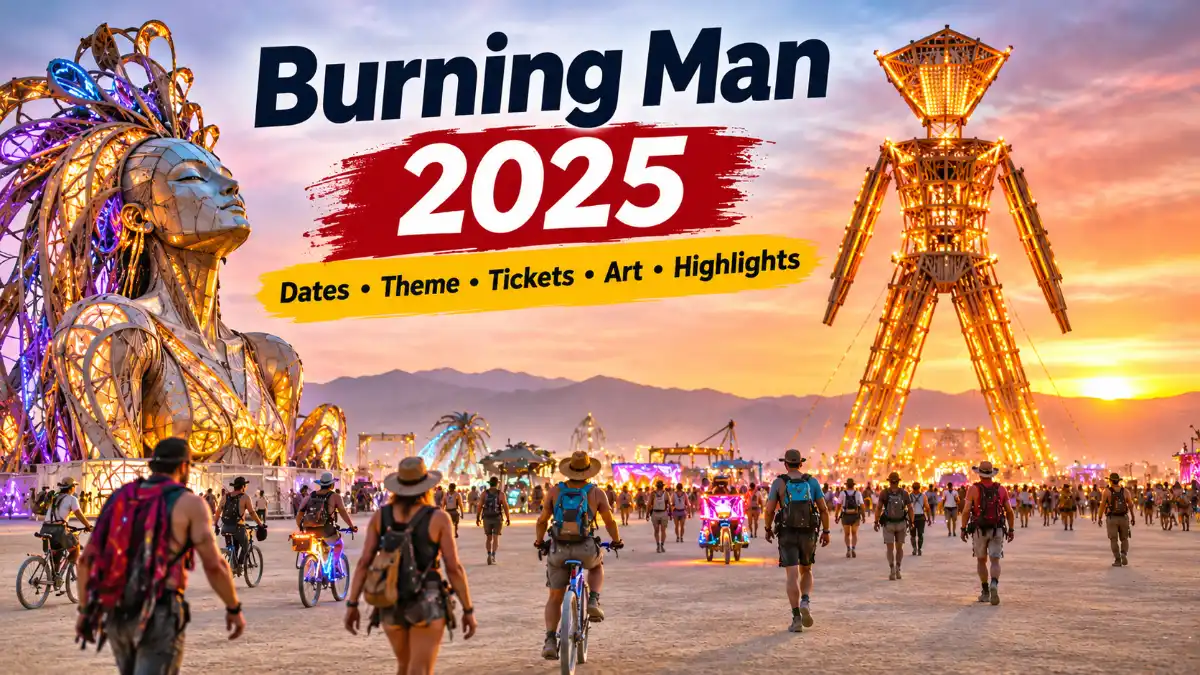
Burning Man 2025 took place from August 24 to September 1, 2025, in Black Rock City, Nevada, a temporary city built in the Black Rock Desert. The event’s theme, Tomorrow Today, explored visions of the future through art, innovation, and community participation. According to the official Burning Man 2025 timeline, the gathering recorded a population of 72,181 people.
The event brought together large-scale art installations, the traditional Man and Temple burns, and thousands of participants who helped shape the experience. It also faced powerful dust storms, heavy rain, temporary gate closures, and damage to camps and artworks. Despite these disruptions, Burning Man continued through its scheduled conclusion.
When and Where Was Burning Man 2025 Held?
Burning Man 2025 ran for nine days, from Sunday, August 24, through Monday, September 1, in Nevada’s Black Rock Desert, approximately 100 miles north of Reno.
Unlike a conventional music festival, Burning Man is built around participation rather than simply watching performances. Attendees, commonly called Burners, contribute through art, performances, themed camps, volunteering, and community activities.
Here are the essential details of the 2025 gathering.
| Event Detail | Burning Man 2025 |
| Dates | August 24–September 1, 2025 |
| Location | Black Rock City, Nevada, USA |
| Theme | Tomorrow Today |
| Official population | 72,181 |
| Main attractions | Art installations, themed camps, Man and Temple burns |
| Public ticket prices | $550–$3,000, depending on tier |
| Event status | Concluded |
Black Rock City exists only temporarily. Participants help build its creative spaces and community infrastructure, then dismantle their camps and remove their belongings when the gathering ends.
Read Also: Concerts: Complete Guide to Upcoming Live Shows, Tickets, Prices, and Events
What Was the Burning Man 2025 Theme?
The official theme, Tomorrow Today, encouraged participants to imagine possible futures through creativity, experimentation, and collective action.
Inspired by World’s Fairs, the concept explored technological progress, social change, and how communities might shape the world ahead.
Instead of presenting a single vision of tomorrow, the theme gave artists and participants room to interpret the future through their own projects and experiences.
One of its most prominent expressions was the World Fair of Unity, the pavilion surrounding the central Man structure. Designed under the direction of artist Mark Rivera, it brought together contributions from 15 artists and art teams.
The pavilion served as a gathering space for exhibitions, performances, and shared creative experiences, connecting the year’s theme with Burning Man’s emphasis on collaboration.
Burning Man 2025 Highlights and Art Installations
Art was a defining part of the 2025 gathering. The event featured 363 art projects, including 58 from outside the United States, representing 31 countries.
The official 2025 AfterBurn report documents the international contributions, major installations, and ways artists adapted to difficult weather conditions.
Several projects stood out for their scale, creative concepts, and connection to the Tomorrow Today theme.
World Fair of Unity
The World Fair of Unity formed the centerpiece of the Man Pavilion. Drawing inspiration from international exhibitions, it brought artists together to explore different visions of the future.
Beyond displaying artwork, the pavilion provided a space where participants could gather, interact, and contribute to the event’s creative atmosphere.
It also connected the Tomorrow Today theme with one of Burning Man’s most recognizable traditions: the ceremonial burning of the Man.
Temple of the Deep
The Temple of the Deep, led by Spanish architect Miguel Arraiz, offered a more reflective experience.
Inspired by the surrounding desert landscape and the appearance of fractured rock, the structure was designed as a place for remembrance, grief, and personal reflection.
Visitors could leave written messages, remember loved ones, or spend time quietly considering their experiences.
Unlike the lively atmosphere surrounding many other installations, the Temple encouraged moments of stillness and connection. Its meaning came not only from the architecture but also from the personal offerings participants brought into the space.
Other Notable Art Projects
Other memorable installations included Rose Wonders by Danish artist Thomas Dambo and Black Cloud, created by the Ukrainian ART Group.
Black Cloud was a large inflatable artwork representing the often-overlooked threats and uncertainties people face. Strong winds severely damaged the installation, but its creators found another way to express their original idea.
Using the remaining material, they transformed the damaged work into a banner carrying the message NO FATE.
Rather than abandoning the project, the artists incorporated the destruction into its story, turning an unexpected setback into a new artistic statement.
The Man Burn and Temple Burn
Two of Burning Man’s defining ceremonies are the burning of the central Man structure and the Temple.
The Man Burn is a large communal celebration associated with the gathering’s creative energy and participatory spirit.
The Temple Burn has a different atmosphere. Participants traditionally observe it in relative silence, allowing space for remembrance, reflection, and emotional release.
Both ceremonies took place during Burning Man 2025, despite the severe weather that disrupted activities earlier in the week.
How Much Were Burning Man 2025 Tickets?
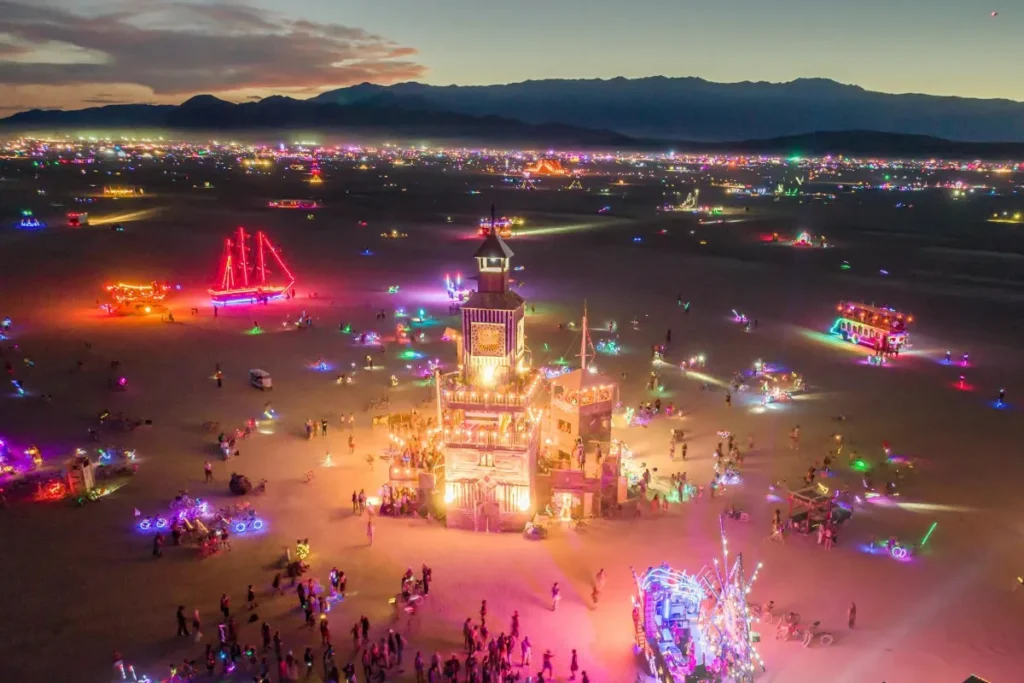
Burning Man 2025 offered several ticket tiers, with public admission prices ranging from $550 to $3,000.
The announced options included $550, $650, $750, $950, $1,500, and $3,000 tickets. Higher-priced tiers helped support reduced-price admission, art grants, and event operations.
According to the official 2025 ticket information, public sales were scheduled for February, April, and July. Separate programs included Stewards allocations and Ticket Aid for qualifying participants.
However, admission was only part of the expense.
Participants also needed to budget for transportation, applicable ticketing fees, vehicle passes, food, drinking water, camping equipment, and other essential supplies.
Because Black Rock City is located in a remote desert environment, attendees must prepare to meet their basic needs during the gathering.
All 2025 ticket sales have concluded. These figures represent historical admission prices, not current ticket availability.
What Happened With the Weather at Burning Man 2025?
Severe weather was one of the biggest challenges of Burning Man 2025, affecting preparations, arrivals, and scheduled activities during the opening days.
On August 23, powerful winds and dust storms swept through Black Rock City before the official event began. The storm damaged camps, shade structures, and artworks, while four minor injuries were reported.
Wind gusts exceeded 50 mph in some locations. Organizers temporarily restricted access as crews assessed damage and participants secured their belongings.
The August 2025 storm coverage documented damaged installations, difficult driving conditions, and lengthy arrival delays.
Rain followed on the night of August 24, creating muddy conditions and complicating access to the site. Participants arriving on August 24 and 25 encountered significant delays.
Another round of rain and thunderstorms struck on August 26, forcing additional gate restrictions. Operations remained disrupted into August 27 because the wet playa was unsuitable for normal vehicle movement.
Some art installations and camps suffered damage, while scheduled activities had to be postponed or adjusted.
The gathering was not canceled, however. As conditions improved, organizers and volunteers restored access, repaired infrastructure, and helped activities resume.
How Did Burning Man 2025 End?
Burning Man 2025 concluded on September 1 after a gathering shaped by ambitious artwork, international participation, and difficult desert weather.
Despite the disruptions, the traditional Man and Temple burns took place. Participants also worked together to repair damaged camps and adapt their activities as conditions changed.
Following the event, participants and cleanup crews began dismantling the temporary city and removing materials from the desert.
The combination of the Tomorrow Today theme, international art projects, and the community’s response to severe storms made 2025 a memorable year in Burning Man’s history.
Frequently Asked Questions About Burning Man 2025
1. How much did a vehicle pass cost at Burning Man 2025?
A vehicle pass cost $150 before applicable fees. It was sold separately from admission tickets, with purchases limited to one vehicle pass per two tickets. Vehicle passes were subject to availability.
2. How many countries participated in Burning Man 2025 art projects?
Burning Man 2025 featured 58 international art projects representing 31 countries outside the United States. These were part of the event’s 363 total art projects.
3. Did Burning Man 2025 have a traditional music festival lineup?
No. Burning Man does not follow the conventional music festival model with a centralized lineup of headline performers. Instead, participants organize DJ sets, live performances, themed camps, and other creative activities throughout Black Rock City.
4. What was the Burning Man 2025 Ticket Aid program?
Ticket Aid offered reduced-price admission to eligible participants with limited financial resources. Applicants had to meet the program’s requirements, and the assistance was separate from standard public ticket sales.
5. What happened to the desert after Burning Man 2025?
After the gathering ended, participants dismantled their camps and removed their belongings. Cleanup crews worked to restore the area under Burning Man’s Leave No Trace principles, which emphasize removing waste, cleaning campsites, and minimizing the event’s environmental impact.