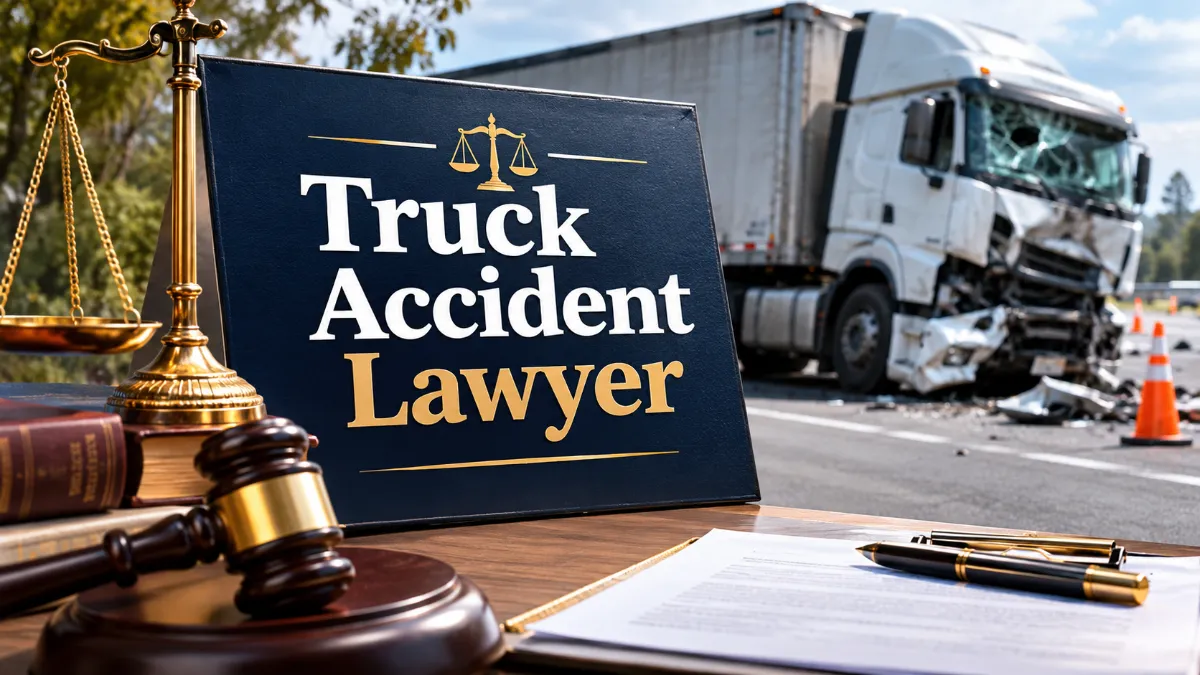
A truck accident lawyer is a personal injury attorney who helps people injured in commercial truck crashes investigate liability, pursue compensation, and handle insurance claims or lawsuits. Hiring one can be particularly important after a serious injury, a fatal collision, disputed fault, or an accident involving multiple potentially responsible parties. An experienced attorney can investigate the crash, preserve evidence, calculate losses, negotiate with insurers, and represent you in court when necessary.
Many truck accident attorneys work on a contingency fee basis, meaning their attorney fees depend on recovering compensation. However, legal costs, filing deadlines, and available damages vary by state and individual circumstances. Knowing what to expect can help you decide whether you need representation and how to choose a qualified lawyer.
What Does a Truck Accident Lawyer Do?
A truck accident attorney handles personal injury claims involving semi-trucks, tractor-trailers, 18-wheelers, and other commercial vehicles. These cases can involve more complicated liability questions and evidence than ordinary passenger-car accidents.
An attorney’s responsibilities typically include:
- Investigating the collision: Reviewing police reports, photographs, witness statements, roadway conditions, and available electronic evidence.
- Identifying responsible parties: Determining whether a driver, trucking company, maintenance provider, or another business contributed to the accident.
- Preserving evidence: Requesting relevant driver logs, vehicle inspection records, and other information before it becomes unavailable.
- Calculating damages: Assessing medical expenses, lost earnings, property damage, and potential long-term losses.
- Negotiating with insurers: Reviewing settlement offers and addressing disputes over coverage or responsibility.
- Representing clients in court: Filing legal claims and presenting evidence when negotiations fail to resolve the dispute.
Truck collision claims share some principles with other personal injury cases, including those handled by a slip and fall lawyer. However, commercial trucking cases may require additional evidence concerning drivers, vehicles, and carrier operations.
Not every collision requires a lawsuit. Many claims are resolved through negotiations, although outcomes depend on the evidence and applicable law.
When Should You Hire a Truck Accident Lawyer?
Consider consulting a commercial truck accident lawyer when an accident causes significant injuries, substantial financial losses, or uncertainty about responsibility.
Legal representation may be especially useful when:
- You require hospitalization, surgery, rehabilitation, or ongoing medical treatment.
- An injury affects your ability to work or earn income.
- A trucking company or insurer disputes responsibility.
- Multiple vehicles or businesses may have contributed to the crash.
- An insurance settlement offer appears insufficient to cover documented losses.
- A family member dies from injuries caused by the collision.
A lawyer is not required for every claim. However, an early consultation may help you understand your options, preserve evidence, and avoid missing legal deadlines.
Who Can Be Liable for a Truck Accident?
Responsibility depends on the circumstances, the parties’ conduct, and applicable laws.
Potentially liable parties include:
- Truck drivers: When distraction, fatigue, speeding, or another negligent action contributes to a crash.
- Trucking companies: When negligent hiring, supervision, or maintenance contributes to an accident, or when applicable law makes them responsible for a driver’s conduct.
- Maintenance providers: When negligent inspections or repairs contribute to mechanical failures.
- Cargo-loading companies: When improper loading or unsecured cargo contributes to the collision.
Several parties may share responsibility. State rules governing comparative or contributory negligence can also affect compensation.
What Evidence Can a Truck Accident Attorney Investigate?
Depending on the circumstances, relevant evidence may include electronic logging device records, driver qualification files, inspection reports, maintenance records, dispatch communications, witness statements, and available vehicle electronic data.
The Federal Motor Carrier Safety Administration’s electronic logging device requirements apply to many commercial drivers who must maintain records of duty status, although exceptions exist.
Federal regulations also address systematic vehicle inspection, repair, and maintenance for covered commercial operations.
Relevant regulatory violations may support a negligence claim but do not automatically establish liability. Timely evidence preservation requests can be important because records may eventually become unavailable.
What Compensation Can a Truck Accident Claim Include?
A truck accident settlement or court award may cover losses resulting from another party’s legally established responsibility.
Depending on state law and the evidence, recoverable damages may include:
- Medical expenses: Emergency care, hospitalization, rehabilitation, and necessary future treatment.
- Lost income: Missed wages and reduced future earning capacity.
- Property damage: Repair or replacement costs.
- Pain and suffering: Physical pain, emotional distress, and other qualifying non-economic losses.
- Wrongful death damages: Certain losses recoverable by eligible surviving family members or an estate.
Compensation depends on injury severity, documented losses, fault allocation, available insurance coverage, and applicable law.
There is no guaranteed settlement amount. Similar accidents can produce substantially different outcomes.
How Much Does a Truck Accident Lawyer Cost?
Many personal injury attorneys use contingency fee arrangements. Rather than charging attorney fees upfront, they receive an agreed percentage of compensation recovered.
Truck accident lawyer fees vary according to the agreement, jurisdiction, and sometimes whether the case settles or proceeds to litigation.
| Cost component | What you should know |
| Attorney fee | Usually an agreed percentage of the recovery |
| Case expenses | May include court fees, expert witnesses, depositions, and record retrieval |
| Payment timing | The agreement explains when fees and expenses are deducted |
| No recovery | Responsibility for expenses depends on the contract and applicable law |
Under applicable state rules, written contingency fee agreements generally explain how fees and expenses are calculated. The American Bar Association’s Model Rule 1.5 on attorney fees also addresses these disclosures.
Some attorneys offer free initial consultations, while others may charge. Confirm the consultation fee before scheduling.
Before signing an agreement, ask whether expenses are deducted before or after calculating the attorney’s percentage, whether that percentage changes during litigation, and what happens if the claim is unsuccessful.
A contingency arrangement does not necessarily mean every expense is free.
What Should You Do After a Truck Accident?
Your health and safety come first. Once immediate medical needs are addressed, these actions may help protect your rights:
- Seek medical attention. Obtain appropriate treatment and follow medical recommendations.
- Report the accident. Contact emergency services or law enforcement as appropriate.
- Preserve evidence. Keep photographs, witness contact details, insurance information, and relevant communications.
- Document losses. Save medical bills, treatment records, repair estimates, and proof of missed work.
- Review settlement documents carefully. Understand what legal rights you may waive before signing a release.
- Consider a legal consultation. Ask about preserving evidence and applicable filing deadlines.
Personal injury deadlines vary by state. A statute of limitations establishes the time available to bring certain legal claims. Some cases, particularly those involving government entities, may also require earlier notices.
How Do You Choose the Right Truck Accident Lawyer?
A qualified semi truck accident lawyer should understand commercial trucking evidence, personal injury litigation, and the laws applicable to your case.
Evaluate the attorney’s relevant experience, professional standing, communication practices, and willingness to explain potential risks.

Questions to Ask During a Consultation
- Have you handled commercial truck accident cases similar to mine?
- Who will personally manage my case?
- What evidence should be preserved immediately?
- What are the biggest potential challenges?
- How are attorney fees and case expenses calculated?
- What happens if negotiations fail?
- What filing deadlines apply?
The American Bar Association’s guidance on questions to ask a lawyer can help you prepare for an initial consultation.
Verify the attorney’s license and disciplinary standing through the appropriate state attorney regulatory authority.
Choose someone who offers a realistic assessment, explains costs clearly, and does not promise a particular settlement.
Frequently Asked Questions
1. Can I File a Truck Accident Claim Without a Lawyer?
Yes. You can generally pursue a personal injury claim without hiring an attorney. However, professional representation may be valuable when injuries are serious, liability is disputed, or multiple insurers and businesses are involved.
2. How Long Does a Truck Accident Settlement Take?
There is no standard timeline. Resolution depends on injury recovery, investigation requirements, liability disputes, insurance negotiations, and whether litigation becomes necessary. Some claims settle relatively quickly, while complicated cases may take considerably longer.
3. What If the Truck Driver Was Partially at Fault?
You may still have a claim if the driver’s negligence contributed to the accident. However, your own share of responsibility, if any, may affect compensation under applicable state negligence rules.
4. Can I Sue a Trucking Company Instead of the Driver?
Potentially. A trucking company may be liable for its own negligence or, under applicable law, for certain actions of its driver. Whether you can pursue the company, the driver, or both depends on the circumstances and legal relationships involved.
5. What Happens If the Insurance Company Denies My Claim?
An attorney can review the denial, examine the available evidence, challenge disputed findings, and consider further negotiations or litigation. A denial does not necessarily eliminate your legal options, but applicable deadlines still matter.