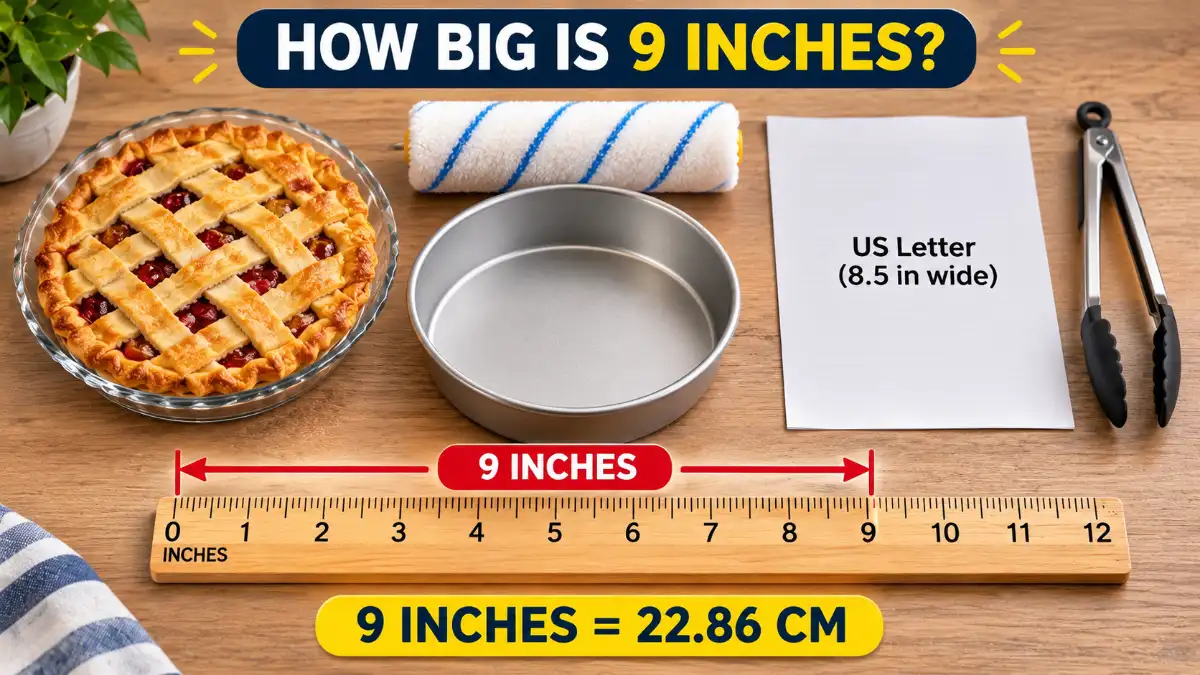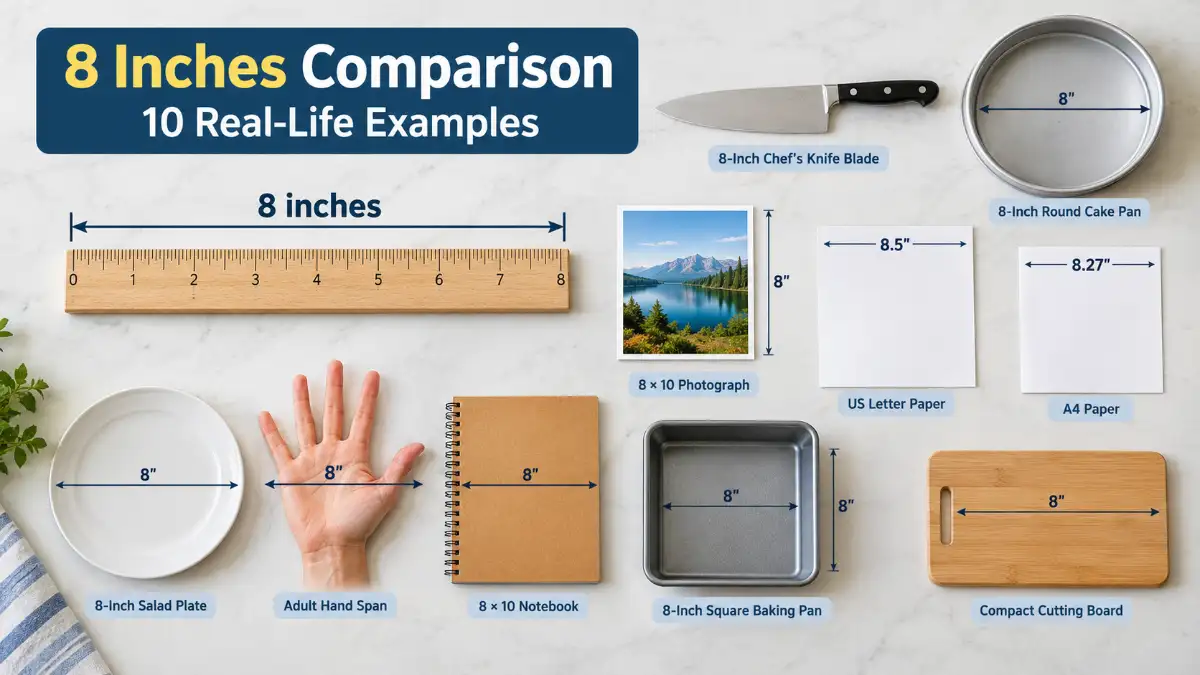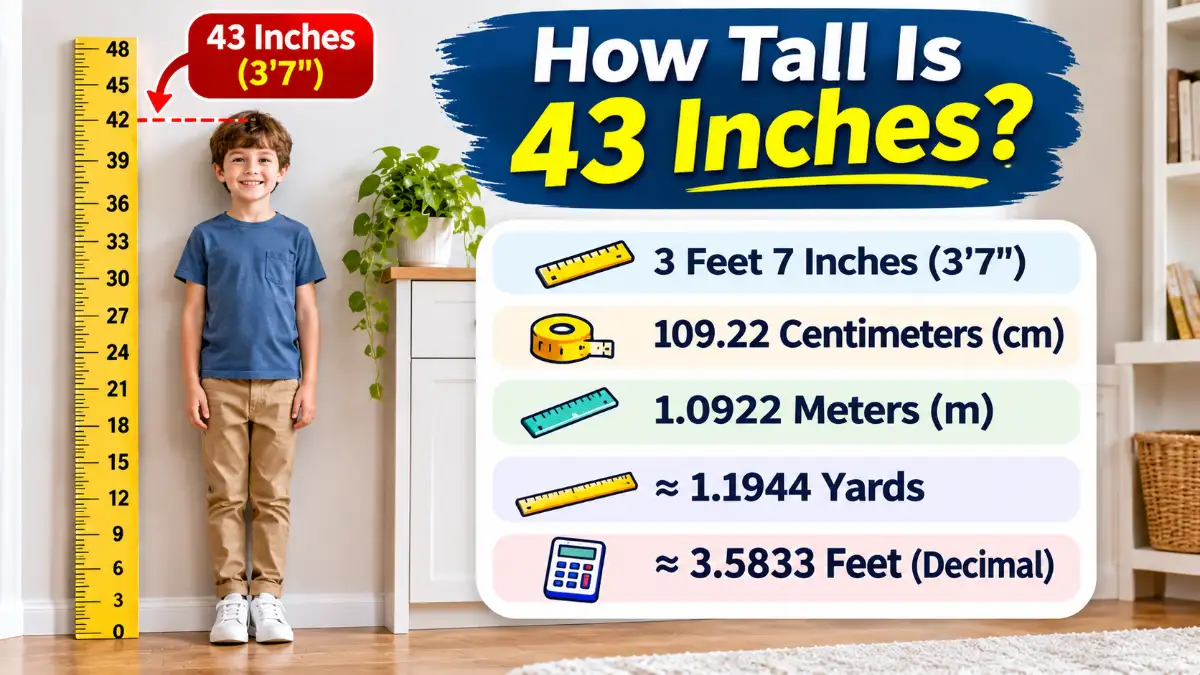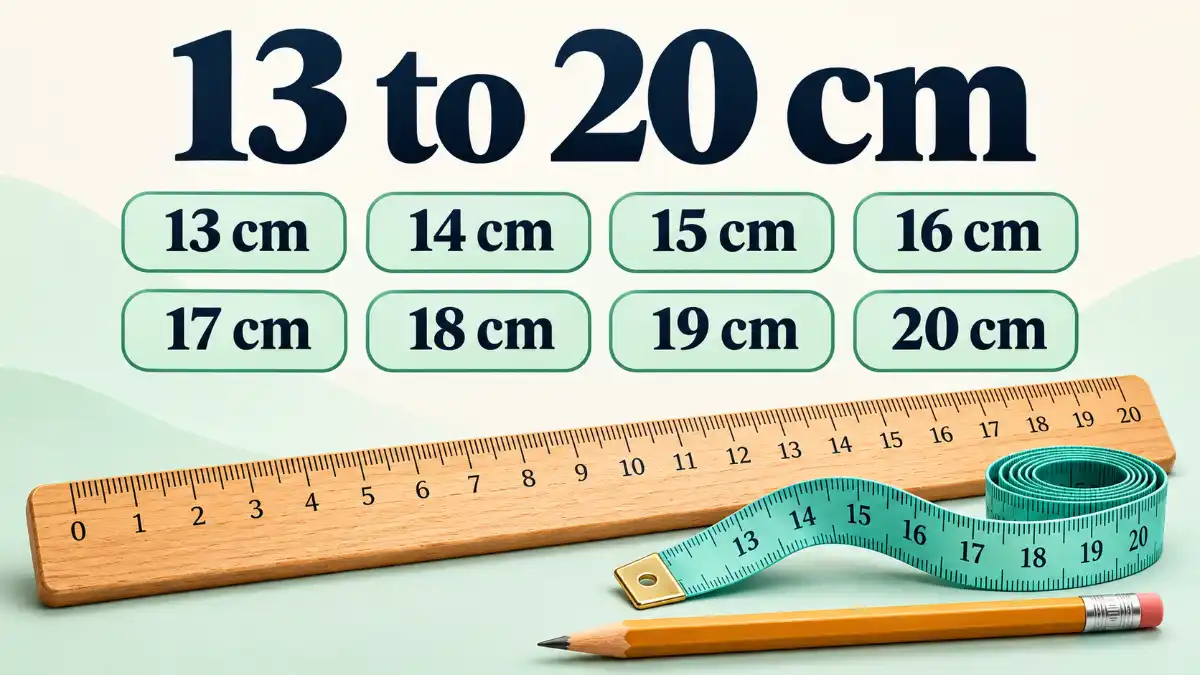
13 to 20 cm when you see measurements such as 13 cm, 15 cm, or 20 cm on a product label, it isn’t always easy to picture their actual size. Knowing the length in inches and comparing it with familiar objects can make these measurements much easier to understand.
The range from 13 to 20 centimeters equals approximately 5.12 to 7.87 inches. These measurements are useful when selecting household accessories, buying products online, checking device dimensions, measuring craft materials, or planning storage spaces.
This guide explains each measurement separately, offers practical size comparisons, and covers how to interpret centimeters correctly when making everyday decisions.
Why Centimeter Measurements Matter
The centimeter is part of the metric system, which is widely used for measuring everyday objects. It provides a convenient way to express lengths that are too small to describe comfortably in meters but larger than dimensions commonly recorded in millimeters.
In the United States, many people are more familiar with inches. This difference becomes noticeable when purchasing international products, reading equipment specifications, or comparing accessories from different manufacturers.
One inch equals exactly 2.54 centimeters. Therefore, converting a measurement from centimeters to inches involves dividing its value by 2.54.
Understanding this relationship allows you to compare dimensions across different measurement systems without guessing.
13 to 20 cm: What Does This Measurement Look Like?
13 cm is approximately 5.12 inches, 130 millimeters, or 0.13 meters. This is a relatively short length that is commonly encountered when measuring compact accessories, craft supplies, small tools, and other handheld objects. One easy way to visualize it is by comparing it with the longer edge of a standard 3 × 5-inch index card,
which measures 12.7 centimeters. The 13-centimeter measurement extends only three millimeters beyond that edge. Although this difference is small, accurate sizing matters when checking whether an object will fit inside a case, drawer, or organizer. For example,
if a product description lists a length of 13 centimeters, check whether the manufacturer is describing its overall external length or the usable space inside it. Those measurements can differ because of material thickness and construction. A metric ruler provides the simplest way to confirm the size.
14 cm: Understanding the Length and Size Difference
14 cm measures approximately 5.51 inches, 140 millimeters, or 0.14 meters. This is slightly longer than five and a half inches and may be useful when evaluating personal accessories, stationery products, kitchen items, and storage components. The difference between 13 and 14 centimeters is exactly 10 millimeters, which can be significant when a product must fit into a precisely sized space. For example,
an accessory measuring 14 centimeters across may not fit an opening that is only 13 centimeters wide, even if the two measurements appear similar in a photograph. When comparing product dimensions,
it is also important to distinguish between length, width, and height. A 14-centimeter measurement could represent any of these dimensions, depending on how the item is positioned. Reading the complete specification is therefore more reliable than estimating size from pictures.
15 cm: How Close Is It to Six Inches?
15 cm equals approximately 5.91 inches, 150 millimeters, or 0.15 meters. This is particularly easy to visualize because it almost matches the length of a six-inch ruler. Six inches equals 15.24 centimeters, meaning the difference is just 2.4 millimeters. This measurement is frequently useful in educational activities, paper crafts, small household projects, and product comparisons. When measuring a straight object,
place it on a stable surface and align its starting point with the zero mark on a ruler. If the object is flexible, allow it to rest naturally without stretching or compressing it. Fifteen centimeters can describe a product’s length,
but it does not reveal its width, thickness, or weight. Consequently, two items measuring the same length may occupy very different amounts of space. Checking all relevant dimensions provides a much better understanding of the item’s actual size.
16 cm: Actual Size and Common Applications
16 cm is equivalent to approximately 6.30 inches, 160 millimeters, or 0.16 meters. It is longer than a standard six-inch measurement by 0.76 centimeters. You may encounter this dimension when reviewing small electronic accessories, desk organizers, craft equipment, personal items, or product packaging. A particularly useful consideration is the difference between an item’s overall dimensions and its functional dimensions. For instance,
a container measuring 16 centimeters externally may have a smaller internal compartment because the walls occupy additional space. This becomes important when choosing storage products or protective accessories. If the item must fit another object precisely,
measure both the external dimensions of the object and the available interior space. Where possible, allow additional clearance so items can be inserted and removed comfortably without causing damage or difficulty.
17 cm: How Long Is It in Everyday Terms?
17 cm equals approximately 6.69 inches, 170 millimeters, or 0.17 meters. This measurement falls between six and seven inches, making it a useful reference when comparing products of moderate handheld size. Seventeen centimeters may appear in descriptions of small kitchen accessories, stationery, tools, display items, and household components. One important detail is the way measurements are presented in online listings. Manufacturers may use different dimension orders,
including length × width × height or width × height × depth. As a result, the same number may describe different directions on different products. Before ordering an item, identify exactly what the 17-centimeter measurement represents. If you are checking a storage space, also measure the opening rather than only the interior. A product may technically fit inside a compartment but still be too large to pass through its entrance.
18 cm: Size in Inches and Useful Comparisons
18 cm measures approximately 7.09 inches, 180 millimeters, or 0.18 meters. This makes it slightly longer than seven inches. The difference between seven inches and 18 centimeters is only 2.2 millimeters, so a seven-inch reference provides a fairly close visual comparison. This length can be useful when evaluating household organizers, small utensils, hobby materials, and accessories. However,
the overall shape of an object affects how large it appears. A narrow item measuring 18 centimeters long may seem compact, while a wide object with the same length may look considerably larger. For rectangular products, consider all three dimensions before deciding whether the item is suitable. When handling objects with curved edges or irregular shapes, measure the greatest distance along each required direction to understand their overall dimensions more accurately.
19 cm: Understanding Its Actual Length
19 cm converts to approximately 7.48 inches, 190 millimeters, or 0.19 meters. It is nearly seven and a half inches, since 7.5 inches equals 19.05 centimeters. The difference is only half a millimeter. This measurement may be used to describe organizers, small trays, stationery accessories, craft materials, and various household products. For general shopping, rounding 19 centimeters to approximately 7.5 inches is usually enough to visualize the size. However,
precision work requires more careful measurement. If you are cutting material or assembling parts, use the original metric value rather than converting to a rounded inch measurement. It is also worth checking whether the manufacturer provides a tolerance, which indicates the permitted variation from the stated dimension. A nominal measurement may differ slightly from the actual finished size.
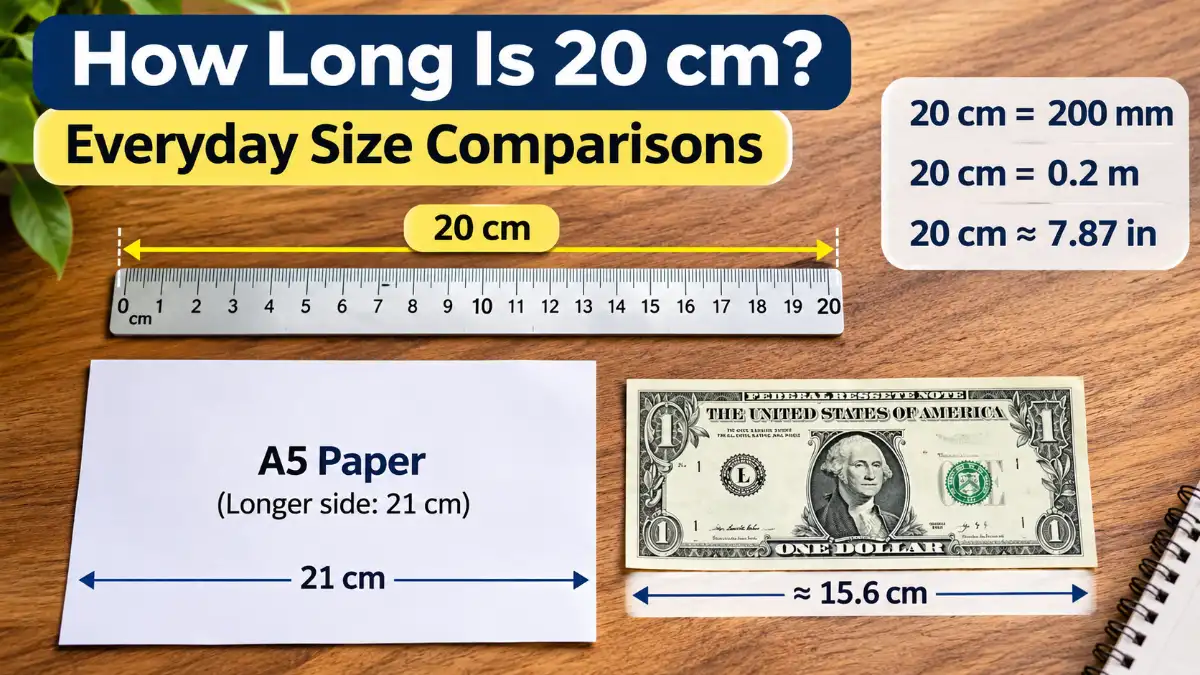
20 cm: How Big Is Twenty Centimeters?
20 cm equals approximately 7.87 inches, 200 millimeters, or 0.20 meters. This is just under eight inches, with a difference of 3.2 millimeters. It also represents one-fifth of a meter. Twenty centimeters is a useful size reference for measuring everyday accessories, kitchen tools, storage products, school materials, and other small objects. A 20-centimeter ruler offers an easy physical comparison. When considering a rectangular item measuring 20 centimeters long,
remember that the length is only one part of its overall dimensions. For example, a flat surface measuring 20 centimeters by 15 centimeters covers an area of 300 square centimeters. A surface measuring 20 centimeters by 10 centimeters covers only 200 square centimeters. Even though both share the same length, their usable areas differ substantially. This is why a single dimension should not be used to judge an object’s total size or capacity.
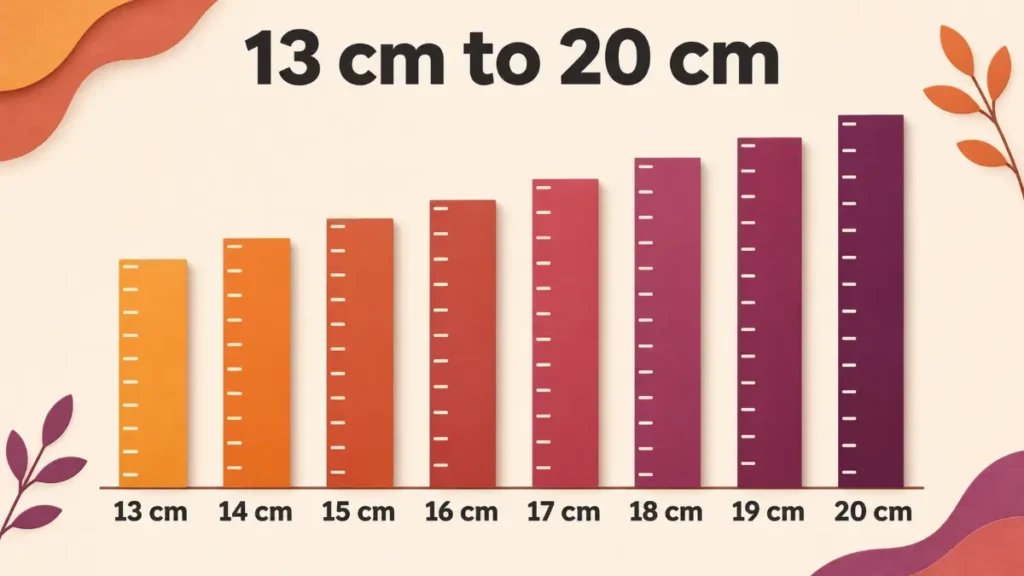
Quick Size Comparison: 13 to 20 Centimeters
The table below shows each measurement alongside its equivalent length in inches and millimeters.
| Length in cm | Approximate inches | Millimeters | Simple comparison |
| 13 cm | 5.12 inches | 130 mm | Slightly longer than 5 inches |
| 14 cm | 5.51 inches | 140 mm | Slightly longer than 5.5 inches |
| 15 cm | 5.91 inches | 150 mm | Just under 6 inches |
| 16 cm | 6.30 inches | 160 mm | Slightly longer than 6 inches |
| 17 cm | 6.69 inches | 170 mm | Between 6.5 and 7 inches |
| 18 cm | 7.09 inches | 180 mm | Slightly longer than 7 inches |
| 19 cm | 7.48 inches | 190 mm | Almost 7.5 inches |
| 20 cm | 7.87 inches | 200 mm | Just under 8 inches |
These comparisons are especially helpful when you have an inch-based ruler but need to understand a metric measurement.
Read Also: How Big Is 5cm? Everyday Comparisons and Ruler Guide
How to Estimate Centimeters Without a Metric Ruler
A metric ruler is the most convenient tool, but other methods can help when one is unavailable.
If you have an inch-based measuring tape, convert the required centimeter length by dividing it by 2.54. You can then measure the approximate equivalent in inches.
Another option is to use an object with a known, standardized dimension. For example, the long side of a standard U.S. 3 × 5-inch index card is 12.7 centimeters.
However, familiar objects such as smartphones, pencils, and wallets vary considerably in size. They may provide a rough visual reference but should not be used for measurements that require accuracy.
For precise work, a ruler or measuring instrument with millimeter markings remains the better choice.
What Is the Difference Between Length, Width, and Height?
Understanding measurement direction is just as important as understanding the numbers.
Length generally describes an object’s distance along one selected direction, often its longest horizontal dimension.
Width describes its measurement across another direction, usually perpendicular to the length.
Height typically describes the vertical measurement from bottom to top when the object is positioned normally.
For three-dimensional objects, depth may also be listed.
A product described as 20 × 15 × 13 centimeters has three separate dimensions. The order must be confirmed from the manufacturer’s labeling because different product categories may use different conventions.
Why Accurate Measurements Are Important When Shopping Online
Product photographs do not always communicate physical scale accurately. Items photographed close to a camera may appear larger than expected, while wide-angle photographs may alter visual proportions.
Dimensions provide a more dependable basis for comparison.
Before purchasing an item, check its full measurements, compare them against the available space, and confirm whether the specifications refer to external or internal dimensions.
This is especially useful for storage containers, protective cases, electronic accessories, furniture components, and products requiring a close fit.
Frequently Asked Questions
1. How many inches are 13 cm to 20 cm?
Thirteen centimeters equals approximately 5.12 inches, while twenty centimeters equals approximately 7.87 inches. Every measurement between these values can be converted by dividing the centimeter figure by 2.54.
2. Is 14 cm bigger than 5 inches?
Yes. Fourteen centimeters is approximately 5.51 inches, making it about half an inch longer than five inches.
3. What is the difference between 15 cm and 18 cm?
The difference is exactly three centimeters or 30 millimeters. In inches, that difference is approximately 1.18 inches.
4. Is 19 cm approximately 7.5 inches?
Yes. Nineteen centimeters is approximately 7.48 inches, which is very close to seven and a half inches. The difference is only 0.05 centimeters.
5. What is the easiest formula for converting centimeters to inches?
Divide the centimeter value by 2.54. For example, 20 ÷ 2.54 equals approximately 7.87 inches. To convert inches back to centimeters, multiply the inch measurement by 2.54.
Final Thoughts
Understanding measurements from 13 to 20 centimeters makes everyday sizing decisions more straightforward. These lengths correspond to approximately 5.12 to 7.87 inches and can be compared with familiar objects, rulers, and product specifications.
The key is to use exact conversion formulas when needed, identify which dimension is being measured, and check complete product measurements rather than relying on photographs or rough estimates.