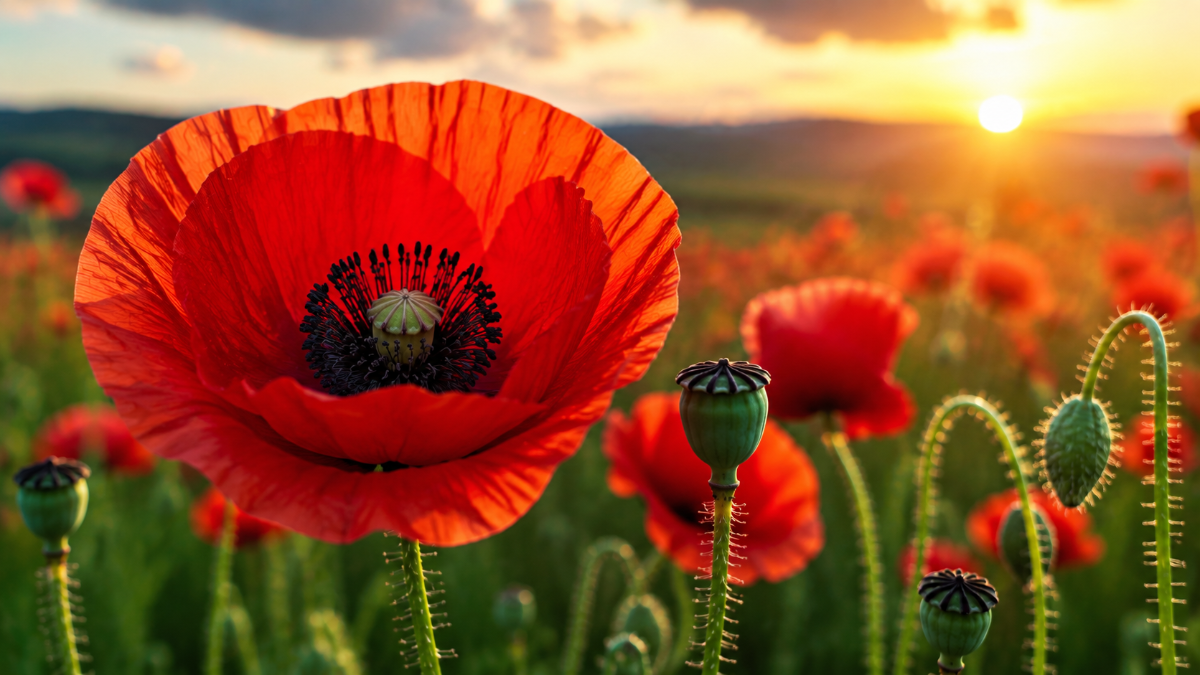
A poppy flower brings vibrant colour, delicate paper-like petals, and a relaxed meadow feel to a garden. But “poppy” does not describe one single plant-common garden poppies include annuals, perennials, and plants from several different genera.
This guide explains popular poppy flower varieties, their meanings, how to grow them from seed, common care problems, and how to choose the best type for your garden.
What Is a Poppy?
Poppies are flowering plants associated with the family Papaveraceae. Many familiar types belong to the genus Papaver, including corn poppy, Oriental poppy, and opium poppy.
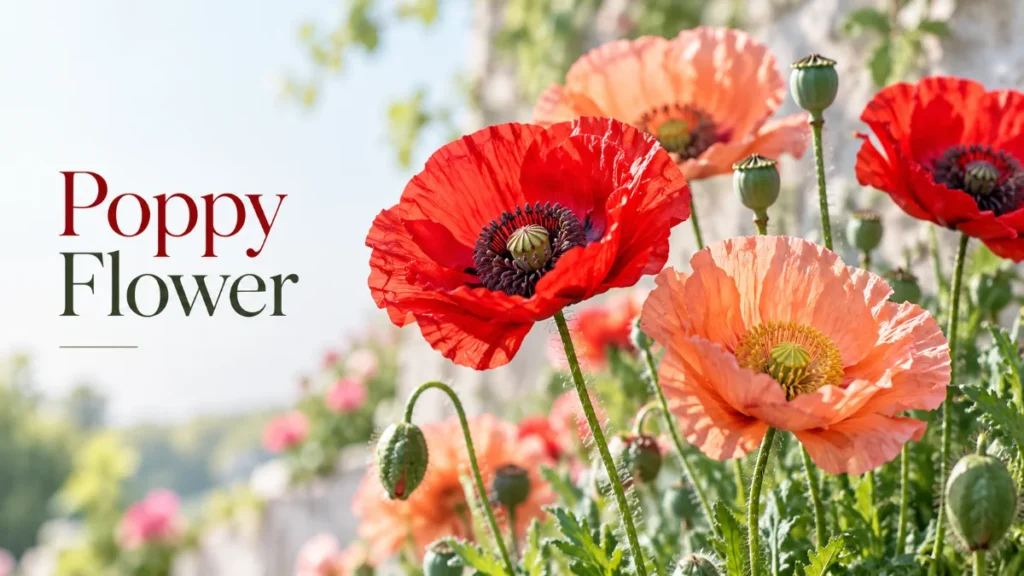
Not every plant called a poppy belongs to Papaver, however. California poppy is Eschscholzia californica, while Himalayan blue poppy belongs to Meconopsis. These plants are related, but their light, soil, and moisture needs can be very different.
Poppies are often recognised by their crinkled petals, prominent seed capsules, and delicate foliage. Their flowers can be red, orange, yellow, white, pink, purple, and even blue.
Poppy Flower Varieties
The botanical name is the best way to identify the exact poppy you are buying or growing. Common names can be confusing because several different plants may be called “poppy.”
| Common name | Botanical name | Life cycle | Best for |
| Corn poppy / field poppy | Papaver rhoeas | Annual | Wildflower-style planting and self-seeding displays |
| Shirley poppy | Papaver rhoeas selections | Annual | Soft pastel cottage-garden colour |
| Oriental poppy | Papaver orientale | Herbaceous perennial | Large, dramatic border flowers |
| Iceland poppy | Papaver nudicaule | Short-lived perennial | Cool-season beds and containers |
| California poppy | Eschscholzia californica | Annual or short-lived perennial | Dry, sunny gardens and poor soil |
| Welsh poppy | Meconopsis cambrica / Papaver cambricum | Perennial | Light shade and woodland-style gardens |
| Himalayan blue poppy | Meconopsis betonicifolia | Perennial | Cool, moist specialty gardens |
| Alpine poppy | Papaver alpinum | Perennial | Rock gardens and sharply drained soil |
Corn poppy
Read More: Purple Flowers
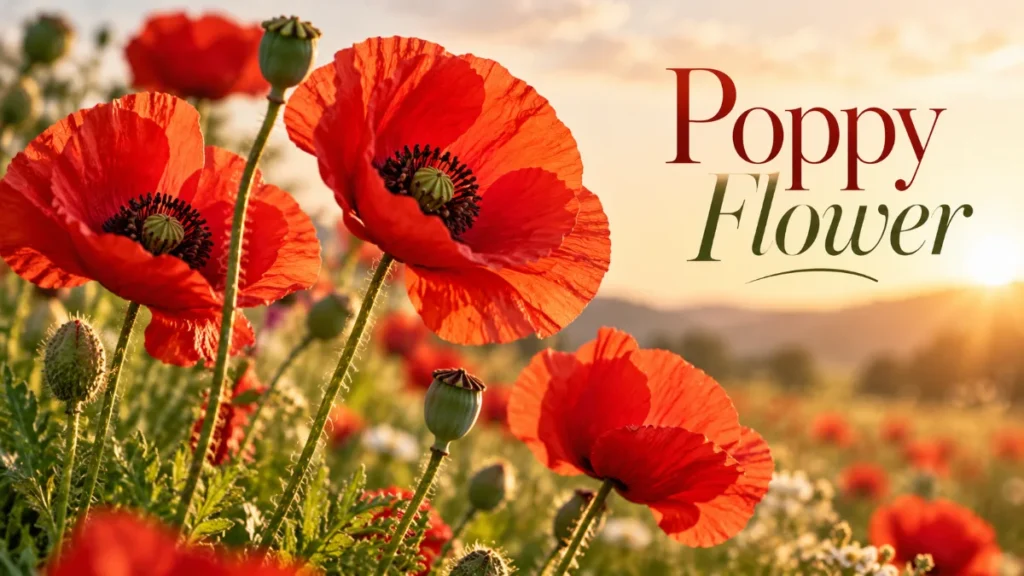
Corn poppy, also called field poppy or Flanders poppy, is known for its scarlet-red flowers with dark centres. It is an annual, meaning each individual plant completes its life cycle in one season.
However, corn poppies often self-seed. If you allow some seed heads to mature and leave the soil relatively undisturbed, a patch can reappear the following year.
Internal-link opportunity: Link “annual flowers” to your annual-flower guide.
Shirley poppy
Shirley poppies are cultivated forms of corn poppy. They provide a softer palette of pink, rose, white, mauve, salmon, and bicoloured blooms.
They suit cottage gardens, informal beds, and meadow-style planting. Sow them directly where you want them to grow, as young seedlings do not respond well to root disturbance.
Oriental poppy
Oriental poppies are large herbaceous perennials with bold flowers in red, orange, coral, pink, plum, and white. Many have a dark blotch at the base of each petal.
They return each year from the same root system, but they dislike being moved once established. Plant them in a permanent sunny position with well-drained soil. The Royal Horticultural Society recommends full sun and good drainage for Papaver orientale.
Internal-link opportunity: Link “herbaceous perennials” to your perennial-flower guide.
Iceland poppy
Iceland poppies have smaller, elegant flowers on tall stems and are available in white, yellow, orange, pink, and cream.
Although technically short-lived perennials, they are often grown as annuals or biennials. They prefer cool weather, making them useful for early-spring planting, mild climates, and containers.
California poppy
California poppy has finely divided blue-green foliage and cup-shaped orange or yellow flowers. It is one of the best choices for dry, sunny ground.
This poppy prefers poor, sandy, gravelly, or sharply drained soil. Avoid heavy feeding and frequent watering after plants are established.
Welsh and Himalayan blue poppies
Welsh poppy works well in light shade, woodland gardens, and informal planting schemes. It is more tolerant of shade than most common garden poppies.
Himalayan blue poppy is a specialty plant that needs cool temperatures, moist but well-drained soil, and shelter from hot afternoon sun. It is best suited to cool climates or experienced gardeners.
How to Grow Poppy Flowers
Poppies are easiest to grow when you choose a type that matches your garden’s sunlight, soil, and climate. Most do best when direct-sown rather than transplanted.
Light
Most common poppies grow and flower best in full sun.
- Corn, Shirley, California, and Oriental poppies prefer bright, sunny positions.
- Welsh poppy tolerates partial shade.
- Himalayan blue poppy benefits from afternoon shade in warm climates.
- Iceland poppies prefer cool, bright conditions rather than prolonged heat.
If stems are thin, floppy, or producing few flowers, insufficient sunlight may be the cause.
Soil
Good drainage is important for most poppies, but soil preference varies by species.
- California poppy prefers lean, dry, sandy, or gravelly ground.
- Corn and Shirley poppies adapt to average garden soil if it drains reasonably well.
- Oriental poppy can grow in loam or clay, provided water does not sit around the roots.
- Himalayan blue poppy needs moisture-retentive, humus-rich soil that does not become waterlogged.
Oriental poppy grows in a range of soils when drainage is adequate; the RHS notes that moderately fertile, humus-rich soil is ideal.
Internal-link opportunity: Link “well-drained soil” to your soil-drainage or soil-improvement guide.
Watering and feeding
Keep newly sown seed consistently moist until it germinates. Once plants are established, reduce watering for drought-tolerant varieties such as California poppy.
Avoid constantly wet soil around mature plants. Overwatering and poor drainage can cause yellow leaves, weak growth, and root problems.
Most poppies do not require heavy fertilizer. Too much nitrogen can lead to lush foliage with fewer flowers. Add compost before planting only if the soil is very poor.
How to plant poppy seeds
- Choose a site suited to the type of poppy you are growing.
- Remove weeds and lightly loosen the top surface of the soil.
- Scatter seeds thinly over the planting area.
- Press seeds gently onto the surface rather than burying them deeply.
- Water with a fine spray so the seeds are not displaced.
- Keep the soil lightly moist until seedlings emerge.
- Thin seedlings once they develop true leaves.
Always check the seed packet for the best planting season, depth, and spacing for the exact variety.
Internal-link opportunity: Link “direct-sown” or “growing flowers from seed” to your seed-starting guide.
Poppy Flower Meaning and Common Problems
Poppy flower symbolism depends on culture, location, and historical context. These meanings are common associations, not fixed rules.
| Poppy colour | Common association |
| Red | Remembrance, sacrifice, consolation |
| White | Peace and non-violent remembrance in some traditions |
| Purple | Memorial or protest symbolism in some campaigns |
| Orange | Warmth, energy, and enthusiasm |
| Yellow | Cheerfulness, optimism, and renewal |
Red poppies are widely associated with remembrance traditions in the United Kingdom, Canada, and the United States.
Internal-link opportunity: Link “flower symbolism” to your flower-meanings article.
Poor flowering
Poppies may fail to flower because of low light, overly rich soil, excess nitrogen, crowding, or unsuitable temperatures.
Start by checking sunlight. Most popular garden poppies need several hours of direct sun each day.
Yellow leaves
Yellowing can be caused by wet soil, poor drainage, seasonal dormancy, or natural post-bloom dieback.
Oriental poppies commonly die back after flowering. This is normal and does not necessarily mean the plant has died.
Weak or leggy seedlings
Leggy seedlings usually need more light. Overcrowding and overly wet soil can also slow growth.
Thin seedlings early and avoid moving young plants unnecessarily.
Aphids
Aphids may gather on stems, buds, or tender growth. Check plants regularly and remove heavily affected growth if needed. A gentle spray of water may help with small infestations.
Avoid unnecessary broad-spectrum insecticides, especially when poppies are attracting bees and other beneficial insects.
Poppy safety and legality
Do not assume an ornamental poppy is safe for dogs or cats. Species differ, and some Papaver plants contain alkaloids that can be harmful if eaten.
If a pet eats a poppy, identify the plant if possible and contact a veterinarian or animal poison-control service promptly.
Papaver somniferum, commonly called opium poppy, has additional legal considerations. In India, licensed cultivation is permitted only in government-notified tracts in Madhya Pradesh, Rajasthan, and Uttar Pradesh, under the Central Bureau of Narcotics licensing framework. Check current local law and obtain appropriate official guidance before growing it
Poppy Flower FAQs
Are poppies annual or perennial?
Both. Corn and Shirley poppies are annuals, while Oriental poppies are perennial. Iceland poppy is a short-lived perennial often grown as an annual or biennial.
Do poppies come back every year?
Perennial poppies such as Oriental poppies return from the same roots each year. Annual poppies do not survive winter as plants, but they can reappear by self-seeding.
How much sunlight do poppies need?
Most common garden poppies need full sun, ideally at least six hours of direct sunlight daily. California, corn, Shirley, and Oriental poppies are best for sunny sites. Welsh poppy tolerates partial shade, while Himalayan blue poppy benefits from afternoon shade in warm climates.
Can poppies grow in pots?
Yes. California poppy and Iceland poppy are generally good container choices. Use a container with drainage holes and free-draining potting mix.
Oriental poppy is less suitable for long-term container growing because of its deep root system and dislike of disturbance.
How long do poppy flowers bloom?
Individual blooms often last only a few days. A group of plants can flower for several weeks as buds open in succession.
Do poppies attract pollinators?
Many poppies attract bees and other insects that collect pollen. Combine poppies with other flowering plants to provide pollinator food across a longer season .Internal-link opportunity: Link “pollinator-friendly flowers” to your bee-friendly gardening guide.
Can poppies tolerate clay soil?
Some can. Oriental poppy is more suitable for clay soil than California poppy, as long as the ground drains well. Improve drainage if water remains on the soil after rain.
What is the difference between California poppy and corn poppy?
California poppy is Eschscholzia californica and usually has orange or yellow cup-shaped flowers with blue-green feathery foliage. Corn poppy is Papaver rhoeas and typically has red, tissue-paper-like flowers with dark centres.
Poppies can be low-maintenance, colourful additions to gardens when their needs are matched to the planting site. For an easy first choice, sow corn poppies for a classic meadow look or California poppies for bright colour in dry, sunny soil.