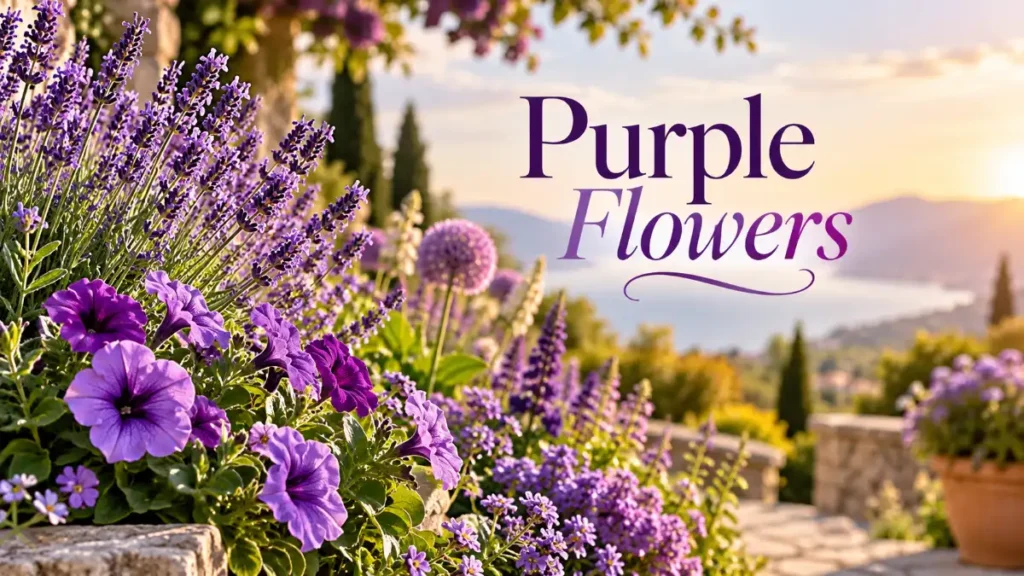
Purple flowers add depth, contrast, and a sense of calm or drama to gardens, depending on the shade and planting combination. From soft lavender and lilac to saturated violet and plum, the best plants are chosen not only for color but also for climate, sunlight, soil drainage, moisture, mature size, and bloom season.
A balanced planting can include bulbs for spring, perennial flowers for reliable borders, annuals for quick color, shrubs for structure, climbers for height, and regionally appropriate wildflowers for naturalistic spaces. This guide explains how to identify, select, grow, and design with purple flowering plants for a longer-lasting garden display.
What are purple flowers?
Purple flowers bloom in shades described as violet, lavender, lilac, mauve, indigo, blue-purple, plum, or burgundy-purple. Flower color can vary with cultivar, light, weather, and the age of the bloom, so nursery labels should be treated as a useful guide rather than an absolute guarantee.
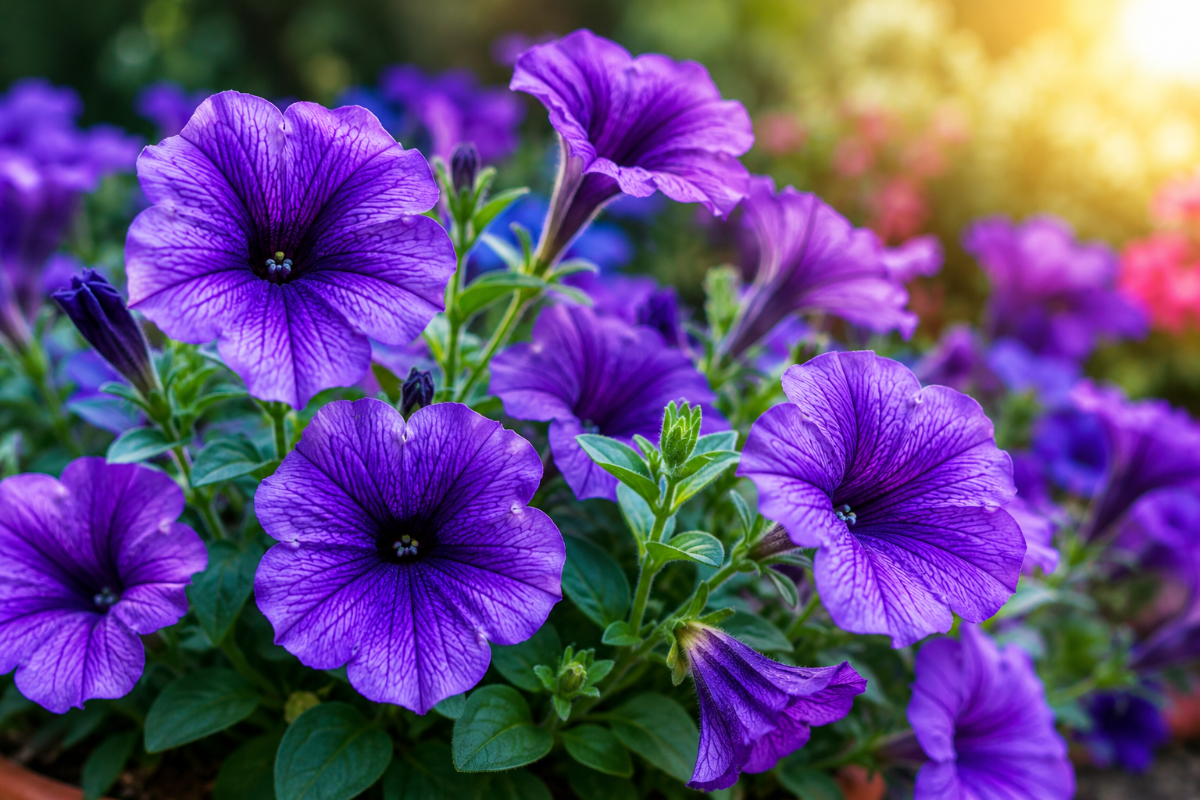
Purple blooms occur across many plant groups, including annuals, perennials, bulbs, shrubs, climbers, and wildflowers. A purple petunia, iris, lavender, aster, clematis, and lilac may share a color family but require very different growing conditions.
When selecting plants, rely on the botanical name and cultivar name as well as the color description. This makes it easier to confirm mature size, hardiness, flowering period, and care needs.
Read More : Bubbles
Best purple flowers by garden use
Start with the role a plant needs to play in the garden. A flower that works well in a dry border may fail in a damp woodland edge, while a climber requires a support system that a compact edging plant does not.
| Garden need | Purple-flowering plants to consider | Why they work |
| Early spring color | Crocus, hyacinth, dwarf iris, viola | Bulbs and cool-season plants flower before most summer perennials |
| Sunny, dry borders | Lavender, catmint, Russian sage, salvia, ornamental allium | Many prefer full sun and free-draining soil |
| Cottage-style planting | Foxglove, delphinium, campanula, hardy geranium, sweet pea | Mixed flower shapes create a relaxed, layered effect |
| Long summer display | Salvia, verbena, petunia, scabiosa, agapanthus | Many flower repeatedly when conditions are right |
| Partial shade | Hellebore, pulmonaria, hardy fuchsia, woodland phlox | Better adapted to reduced direct sun than Mediterranean plants |
| Containers | Petunia, calibrachoa, heliotrope, verbena, viola | Compact habits and repeated flowering suit pots |
| Vertical interest | Clematis, wisteria, sweet pea, morning glory | Use fences, arches, walls, and trellises efficiently |
| Naturalistic planting | Native asters, bee balm, penstemon, blazing star | Local species can add seasonal diversity and habitat value |
Select plants after observing the planting site. Sun exposure, soil texture, drainage, and seasonal moisture are more important than flower color when predicting success. Wildflower and prairie-garden guidance similarly recommends matching plants to the site’s soil, moisture, and available sunlight.
Purple perennial flowers for reliable borders
Purple perennial flowers return for several years when they suit the local climate and growing conditions. They are useful for establishing a garden’s long-term structure, but their lifespan, flowering period, and maintenance needs vary by species and cultivar.
Lavender (Lavandula spp.)
Lavender is valued for aromatic foliage and upright spikes of lavender-purple flowers. It works especially well in sunny borders, gravel gardens, edging, herb gardens, and containers.
Lavender needs full sun and fast-draining soil. It is poorly suited to dense shade, persistently wet ground, or cold, waterlogged winter conditions. A raised bed or container is often a better option where soil drains slowly. Annual trimming after flowering helps keep plants compact and reduces woody, open growth.
Catmint (Nepeta spp.)
Catmint produces mounds of aromatic gray-green foliage with soft blue-purple flower spikes. It is a practical choice for edging paths, filling the front of sunny borders, or weaving around roses and taller perennials.
Most catmints are relatively undemanding once established. Cutting back spent flowering stems after the first major flush can improve the plant’s shape and may encourage later flowers.
Salvia, or ornamental sage (Salvia spp.)
The large Salvia genus includes hardy perennials, tender plants, annual bedding varieties, and culinary herbs. Many purple-flowering salvias have tubular blooms on vertical stems, making them useful for adding height and rhythm to a mixed border.
Check the species or cultivar before planting. Hardiness ranges widely, and a salvia that survives winter in one region may need to be treated as an annual elsewhere. Most flowering salvias perform best in good light, with drainage and enough space for air circulation.
Purple coneflower (Echinacea purpurea)
Purple coneflower has large daisy-like blooms with pink-purple ray florets around a raised central cone. It suits prairie-inspired beds, cutting gardens, and sunny perennial borders.
The straight species and named cultivars can differ substantially in vigor, height, flower form, and longevity. Choose plants for local climate and garden conditions rather than assuming all purple coneflowers perform alike.
Bearded iris (Iris germanica hybrids)
Bearded iris offers some of the richest violet, blue-purple, and near-black shades in the spring garden. Its sword-like foliage also gives the border a strong vertical structure outside the flowering period.
Most bearded irises need sun and well-drained soil. Their rhizomes should not be buried deeply, and wet winter soil can cause problems. Plant them where neighboring foliage will help hide the leaves after flowering without crowding the rhizomes.
Ornamental allium (Allium spp.)
Ornamental alliums produce globe-shaped or oval flower heads made up of many small, star-shaped flowers. Their architectural form creates a useful contrast with softer plants such as catmint, hardy geranium, and ornamental grasses.
Most are planted as bulbs in autumn for spring or early-summer bloom. Their foliage often declines after flowering, so place them among later-emerging perennials that can conceal fading leaves while leaving stems and seed heads visible.
Campanula, or bellflower (Campanula spp.)
Bellflowers range from low spreading ground covers to upright border perennials. Their bell-, cup-, or star-shaped flowers can be lavender, violet, blue-purple, or white.
Use low types around paving, walls, and border edges. Taller species are effective in cottage-style planting. Check the species before buying because height, spread, and growth habits differ widely within the genus.
Delphinium (Delphinium spp.)
Delphiniums make striking spikes of blue-purple, violet, pink, or white flowers. They are valuable rear-border plants but may need staking in exposed gardens and can be short-lived in hot or humid climates.
Cutting back flowering stems after the first display can improve appearance and may encourage fresh growth or a later, lighter bloom. Support tall varieties before they become top-heavy.
Asters (Symphyotrichum spp. and related genera)
Asters are among the most useful purple flowers for late-season gardens. Their daisy-like blooms extend color into late summer and autumn, when many spring and early-summer perennials have finished.
Use compact, clump-forming varieties in formal borders and regionally appropriate native species in naturalistic or pollinator-oriented planting. Good airflow and appropriate spacing help reduce foliar disease issues.
Annual purple flowers for quick color
Annuals finish their life cycle in one season, though a few can persist longer in frost-free climates. They are useful for filling bare spaces, refreshing containers, and experimenting with planting combinations before committing to permanent plants.
Petunia (Petunia hybrids)
Petunias offer purple, violet, lavender, and bicolor flowers for beds, window boxes, containers, and hanging baskets. Trailing varieties spill over pot edges, while mounding types create dense displays.
Most need abundant sun, regular watering in containers, and adequate feeding during active growth. Some modern cultivars are more self-cleaning than older types, but removing spent blooms still improves the look of many plants.
Verbena (Verbena spp.)
Garden verbena produces dense clusters of small flowers, often in vivid purple and violet shades. It suits sunny containers, hanging baskets, and hot, open planting areas.
Good drainage matters. Keep the root zone evenly moist during establishment, but avoid constantly saturated compost or soil. Trailing forms work especially well as container spillers.
Heliotrope (Heliotropium arborescens)
Heliotrope produces rounded clusters of small, fragrant purple flowers above dark green foliage. It brings both color and scent to containers near doors, patios, and seating areas.
In frost-prone climates, heliotrope is generally grown as a tender annual. Give it warmth, fertile growing medium, and consistent moisture while avoiding waterlogged soil.
Pansies and violas (Viola spp.)
Pansies and violas are excellent cool-season choices, available in shades from soft lavender to deep purple and nearly black. They can provide color in early spring and autumn, especially in containers and at the front of beds.
Use them to fill the seasonal gap around spring bulbs or before warm-season annuals are planted. In hot weather, flowering often slows, so replace or combine them with summer plants as temperatures rise.
Ageratum (Ageratum houstonianum)
Ageratum produces soft, floss-like clusters of blue-violet flowers. Its rounded texture contrasts well with upright purple salvias and spiky ornamental grasses.
Use it as a filler in annual borders or sunny containers. It is particularly useful when a planting needs a cool-toned transition between larger, bolder flowers.
Purple shrubs and climbers
Shrubs and climbers provide height, structure, and a longer-term framework for the garden. They require more planning than bedding plants because their mature size, pruning needs, and root systems can influence a space for years.
Lilac (Syringa spp.)
Lilacs produce fragrant clusters of pale lavender, violet, purple, or white flowers in spring. They are well suited to mixed shrub borders, informal hedges, and cut-flower gardens.
Provide sun, airflow, and enough room for mature growth. If pruning is needed, do it soon after flowering; late pruning can remove buds that would produce the following spring’s display.
Butterfly bush (Buddleja spp.)
Butterfly bush bears long flower panicles, often in purple shades, through summer and early autumn in suitable climates. Its arching form makes a strong statement in a sunny border.
Its suitability depends on location. Some Buddleja species are invasive in certain regions, so gardeners should check local guidance before planting and consider noninvasive or native alternatives where needed.
Caryopteris, or bluebeard (Caryopteris × clandonensis)
Caryopteris is a compact deciduous shrub with blue-purple late-summer flowers. It is useful for extending a border’s color after spring shrubs have finished.
Plant it in sun and well-drained soil. Avoid cold, wet positions, where winter damage is more likely.
Clematis (Clematis spp.)
Clematis offers purple flowers in many forms, from large, flat blooms to small bells. It can cover a trellis, fence, obelisk, or wall without occupying the ground space required by a large shrub.
Pruning depends on the cultivar’s flowering group. Clematis are commonly divided into groups according to flowering time and whether blooms form on older or current-season growth; pruning at the wrong time can remove flower buds.
Wisteria (Wisteria spp.)
Wisteria produces hanging clusters of lilac to violet flowers in spring or early summer. It can be dramatic on a sturdy pergola, arbor, or wall but is vigorous and requires substantial support and regular pruning.
Choose a named plant from a reputable nursery and allow enough room for maturity. Wisteria is best treated as a deliberate structural feature, not a low-maintenance border plant.
Purple wildflowers and native planting
Purple wildflowers can create a more natural garden character while adding flowers across the season. However, “wildflower” does not automatically mean native, ecologically appropriate, or suitable for every region.
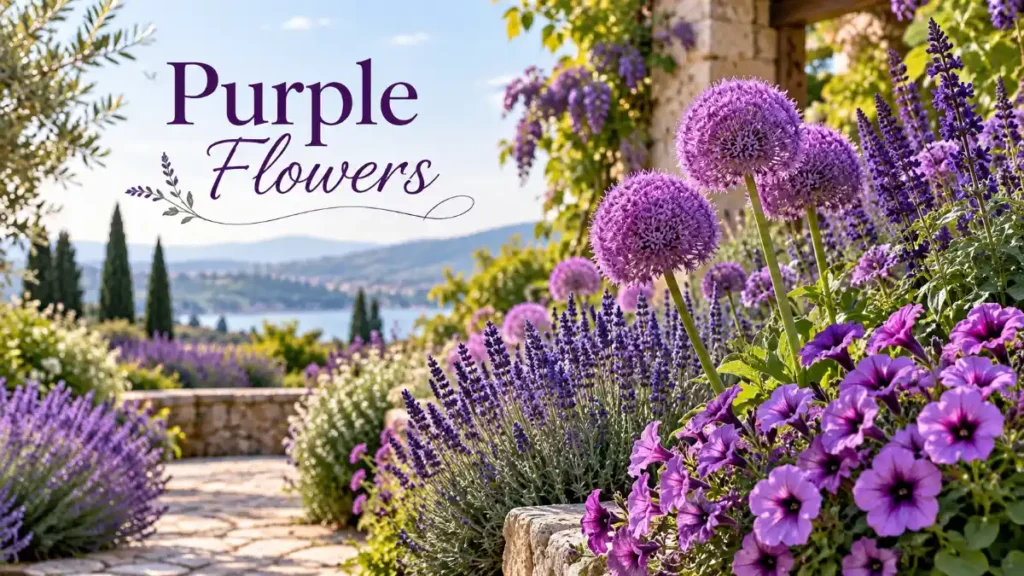
For a habitat-focused planting, begin with a regional native-plant list from an extension service, botanical garden, conservation organization, or native-plant society. Choose species for their local range and site conditions rather than selecting by flower color alone.
Potential purple or purple-toned native plants may include:
- Wild bergamot or bee balm (Monarda fistulosa)
- New England aster (Symphyotrichum novae-angliae)
- Purple coneflower (Echinacea purpurea) within its native range
- Blazing star (Liatris spp.)
- Penstemon (Penstemon spp.)
- Purple prairie clover (Dalea purpurea)
- Spiderwort (Tradescantia spp.)
- Wild lupine (Lupinus perennis) in suitable regions
- Blue vervain (Verbena hastata) for moist sites
- Woodland phlox (Phlox divaricata) in appropriate shaded settings
A successful native planting includes species with different bloom periods, growth forms, and moisture requirements. Native plants are adapted to specific regional conditions, so confirm that each selection is suitable for your location rather than relying on a general plant list.extension.umn+1
How to identify purple flowers
Flower color is only the first clue in purple flower identification. Many unrelated plants have violet or lavender blooms, so accurate identification requires observing the whole plant.
Use these plant-identification clues
- Flower shape: Look for spikes, globes, bells, daisies, pea flowers, trumpets, tubes, or clustered blooms.
- Petal arrangement: Note the petal number, fused petals, lips, spurs, central cone, or other distinctive structures.
- Leaves: Observe shape, margins, veins, scent, texture, and whether leaves are opposite, alternate, or in a basal rosette.
- Stem and growth habit: Determine whether the plant is a bulb, annual, herbaceous perennial, shrub, vine, or ground cover.
- Bloom season: An early-spring bulb and a late-autumn daisy are unlikely to belong to the same plant group.
- Growing location: Record whether it is growing in sun, shade, dry soil, wet soil, woodland, grassland, a roadside, or a cultivated bed.
- Seed heads and fruit: These features can be more diagnostic than the bloom after flowering ends.
Photograph the entire plant, a flower close-up, leaves, stem, and surrounding habitat. Do not eat or use an unidentified plant based only on a photo match.
Choosing purple flowers for your garden
The right plant is one that fits the site you already have. A beautiful variety can struggle if planted in unsuitable light, soil, drainage, or winter conditions.
Purple flowers for full sun and dry soil
Lavender, alliums, catmint, salvia, bearded iris, Russian sage, verbena, and caryopteris are strong options for sunny, free-draining areas. These plants generally dislike wet roots, especially during winter.
Lavender is particularly sensitive to shade and waterlogged soil. It thrives in full sun, free-draining ground, containers, and raised beds, but it does not perform well in heavy, wet, or cold soil.rhs+1
Purple flowers for average garden soil
Purple coneflower, hardy geranium, many salvias, campanula, penstemon, agapanthus, and asters can grow well in ordinary garden soil that does not remain wet for long periods.
Newly planted perennials still need regular watering while their roots establish. Once established, watering needs should be based on weather, soil type, and the individual species.
Purple flowers for moist soil
For consistently moist but not waterlogged ground, consider bee balm, selected asters, blue vervain, certain iris species, and other plants suited to your climate. Do not try to force drought-loving plants into wet soil; choose plants adapted to the natural conditions instead.
Purple flowers for partial shade
Hardy fuchsia, pulmonaria, hellebore, woodland phlox, selected campanulas, and some hydrangeas can tolerate partial shade. Observe the quality of shade: a site with morning sun and afternoon shade differs greatly from dense shade beneath evergreen trees.
Hardy fuchsias can flower in full sun or partial shade, but their hardiness, flowering, and winter survival vary by cultivar and climate.
Purple flowers for containers
For pots, choose compact varieties and use a free-draining container mix in a pot with drainage holes. Petunias, violas, verbena, heliotrope, dwarf salvias, trailing lobelia, and compact lavender are useful options.
Containers dry out faster than garden beds, especially in heat or wind. Group plants with similar watering needs together and avoid leaving pots in standing water.
How to grow and care for purple flowers
Purple blooms do not share a universal care routine. Their needs are shaped by their species, origin, growth habit, and local conditions.
Plant at the appropriate time
Plant hardy perennials during cool weather, usually in spring or early autumn depending on the climate. Plant spring-flowering bulbs in autumn. Set out tender annuals only after the risk of frost has passed.
Improve soil thoughtfully
Remove weeds and address serious compaction before planting. Add organic matter where soil structure is poor, but do not assume every bed needs the same amendment.
Avoid mixing a small amount of sand into heavy clay in an attempt to create drainage; this can create a dense, compacted mixture. For plants that require excellent drainage, choose raised beds, containers, or naturally freer-draining parts of the garden.
Water deeply while plants establish
New plants need enough water to develop roots beyond the original root ball. Deep, thorough watering is generally more effective than frequent shallow sprinkling, but the right schedule depends on rainfall, soil texture, temperature, and plant type.
Check the soil before watering. If the root zone is dry, water thoroughly; if it remains wet, wait. Root problems are often caused by poor drainage rather than lack of water.
Mulch with the plant in mind
Organic mulch helps suppress weeds, conserve moisture, and moderate soil temperature. Keep it away from crowns, stems, and woody trunks to reduce rot and pest issues.
Mediterranean plants such as lavender generally prefer open, free-draining conditions. Gravel or a mineral mulch around the crown may be more suitable than thick, moisture-retentive organic mulch.
Feed only when necessary
Too much fertilizer, particularly high-nitrogen fertilizer, can encourage leafy growth at the expense of flowers. Compost, a balanced fertilizer, or a container-plant feed can be useful when the plant and growing medium require it, but more fertilizer is not automatically better.
Deadhead selectively
Removing faded flowers improves appearance and can encourage more blooms in many annuals and repeat-flowering perennials. Cut spent flowers back to the next leaf, bud, or side shoot where appropriate.
Do not deadhead plants grown for seed heads, bird food, self-sowing, or winter interest. Leave seed heads on plants such as alliums or coneflowers when their structure adds value after flowering.
Designing with purple flowers
Purple can be peaceful, dramatic, cool, or moody depending on its shade and neighboring colors. Planning by bloom sequence, height, texture, and light conditions produces a more cohesive result than scattering similar colors at random.
Build a season-long purple border
A layered planting can include:
- Early spring: Crocus, hyacinth, dwarf iris, viola
- Late spring: Allium, bearded iris, lilac, hardy geranium, clematis
- Early to midsummer: Lavender, catmint, salvia, delphinium, campanula
- Late summer: Purple coneflower, agapanthus, Russian sage, caryopteris, verbena
- Autumn: Asters, monkshood, late salvias, and ornamental grasses
This sequence avoids a short burst of color followed by a long gap. It also creates a more useful garden for people and pollinators across the growing season.
Pair purple with the right colors
Deep purple flowers stand out beside chartreuse foliage, silver leaves, yellow coreopsis, orange geums, or golden rudbeckia. Pale lavender combines more softly with white, blush pink, cool blue, and gray-green foliage.
Use contrast sparingly in small spaces. In larger borders, repeat similar shades of purple in several places to connect separate areas of the planting.
Balance form and texture
Pair upright flower spikes such as lavender, salvia, and delphinium with rounded forms such as alliums, hydrangeas, or coneflowers. Combine fine textures with broader leaves and use grasses to create movement between flowering plants.
Place tall plants toward the back of a border or in the middle of an island bed. Keep low-growing plants along paths and edges, where their detail can be appreciated.
Common mistakes with purple flowering plants
- Choosing plants by color before checking hardiness, light, soil, and drainage
- Combining drought-tolerant lavender with moisture-loving plants in the same watering zone
- Planting a climber without a support strong enough for its mature weight
- Assuming all purple flowers are equally useful to pollinators
- Pruning flowering shrubs at the wrong time and removing future buds
- Crowding perennials until airflow and flowering decline
- Overfeeding with high-nitrogen fertilizer
- Treating any attractive wildflower as native or appropriate for the region
- Using flower color alone to identify an unknown plant
- Forgetting that dark purple flowers can visually disappear in deep shade or at dusk
Frequently Asked Questions
What are the easiest purple flowers for beginners?
For sunny beds, catmint, hardy geranium, purple coneflower, salvia, and many ornamental alliums are good starting points when they match the local climate and soil. For pots, violas, petunias, verbena, and compact salvias provide quick color. The simplest choice is usually a plant suited to the garden rather than one marketed as low-maintenance. First assess sunlight, drainage, and whether the soil remains dry, average, or consistently moist. Then choose plants that naturally tolerate those conditions.
Which purple flowers bloom all summer?
Some annuals and repeat-flowering perennials can provide purple blooms for much of summer, but few flower continuously without suitable care. Petunias, verbena, heliotrope, and some salvias are useful for containers and bedding displays. In borders, catmint, certain salvias, scabiosa, and repeat-flowering hardy geraniums may extend their flowering period when spent blooms are removed. For the most reliable seasonal color, combine these with earlier bulbs and later asters instead of depending on one plant to flower from spring through autumn.
Are lavender flowers and purple flowers the same thing?
Lavender flowers are one type of purple flower, but the terms are not interchangeable. Lavender can mean the plant genus Lavandula, which has aromatic foliage and flower spikes, or it can describe a pale purple color. A lavender-colored iris, petunia, salvia, or aster is not botanically related to lavender. Check the botanical name before buying or planning care. Lavender needs sunny, free-draining conditions that would not suit many other purple-flowering plants.
What purple flowers grow well in shade?
Good options for partial shade include pulmonaria, hellebores, hardy fuchsias, woodland phlox, selected campanulas, and certain hydrangeas. The right choice depends on the kind of shade and the soil moisture. Morning sun with afternoon shade supports more flowering than dense shade beneath trees. Tree-rooted shade is often dry, while shaded low areas can remain wet. Avoid growing lavender, allium, or Russian sage in shade because they usually become sparse and produce fewer flowers.
Which purple flowers are best for pollinators?
Regionally native asters, wild bergamot, penstemon, blazing star, prairie clover, and locally appropriate coneflower species can be useful choices. Flower color alone does not determine pollinator value. Accessible flower shapes, bloom timing, pesticide-free care, water availability, and nesting habitat all matter. Include several species that flower from spring into autumn rather than relying on a single cultivar. For the strongest ecological fit, select plants native to your region and matched to the soil, moisture, and sunlight in your garden.
Can purple flowers grow in pots?
Yes. Pots are ideal for purple petunias, violas, verbena, heliotrope, trailing lobelia, compact salvias, and smaller lavender cultivars. Use containers with drainage holes and a quality potting mix instead of dense garden soil. Combine plants with similar watering requirements; petunias and verbena are more compatible in one pot than lavender and moisture-loving annuals. Check containers frequently during hot or windy weather because they dry much more quickly than in-ground beds. Feed and deadhead according to the needs of the individual plants.
Why did my purple flowers turn blue, pink, or faded?
Flower color can change with cultivar genetics, weather, temperature, light intensity, and flower age. Many blooms fade or shift slightly as they mature. Bigleaf hydrangeas are a special case because flower color in some varieties can respond to soil chemistry and aluminum availability, but not all hydrangeas change this way. Identify the plant before changing soil pH or fertilizer. Unnecessary amendments can damage plant health without producing the desired color change.
What purple flowers are safe around pets?
Safety cannot be determined by flower color. Toxicity depends on the plant species, plant part, amount consumed, and animal involved. Some bulbs, shrubs, and ornamental perennials can cause serious illness if eaten. If pets or children may chew plants, verify each species through a veterinary poison-control resource or qualified local professional before planting. Keep botanical names and nursery labels. If an animal has eaten an unknown plant, contact a veterinarian or animal poison service promptly rather than waiting for symptoms.
How do I keep purple perennial flowers blooming every year?
Begin with plants hardy in your climate and suitable for the site. Water consistently during the first growing season, then adapt care to the mature plant’s moisture needs. Divide crowded clumps when appropriate, remove diseased foliage, and deadhead repeat bloomers where useful. Do not prune spring-flowering shrubs late in the season because many set next year’s flower buds soon after blooming. Mulch thoughtfully, protect marginally hardy plants during severe winters, and accept that some short-lived perennials may eventually need replacement.
What are good companion plants for purple flowers?
Purple flowers combine well with silver foliage, white flowers, pale pinks, blues, chartreuse leaves, and warm yellows or oranges. In a dry sunny border, pair lavender or catmint with ornamental grasses, yarrow, artemisia, and yellow coreopsis. For a cottage border, combine purple salvia, irises, and alliums with roses, foxgloves, hardy geraniums, and pale pink peonies. Choose companions with similar light, soil, and water needs first; color and texture should refine the combination rather than override plant compatibility.