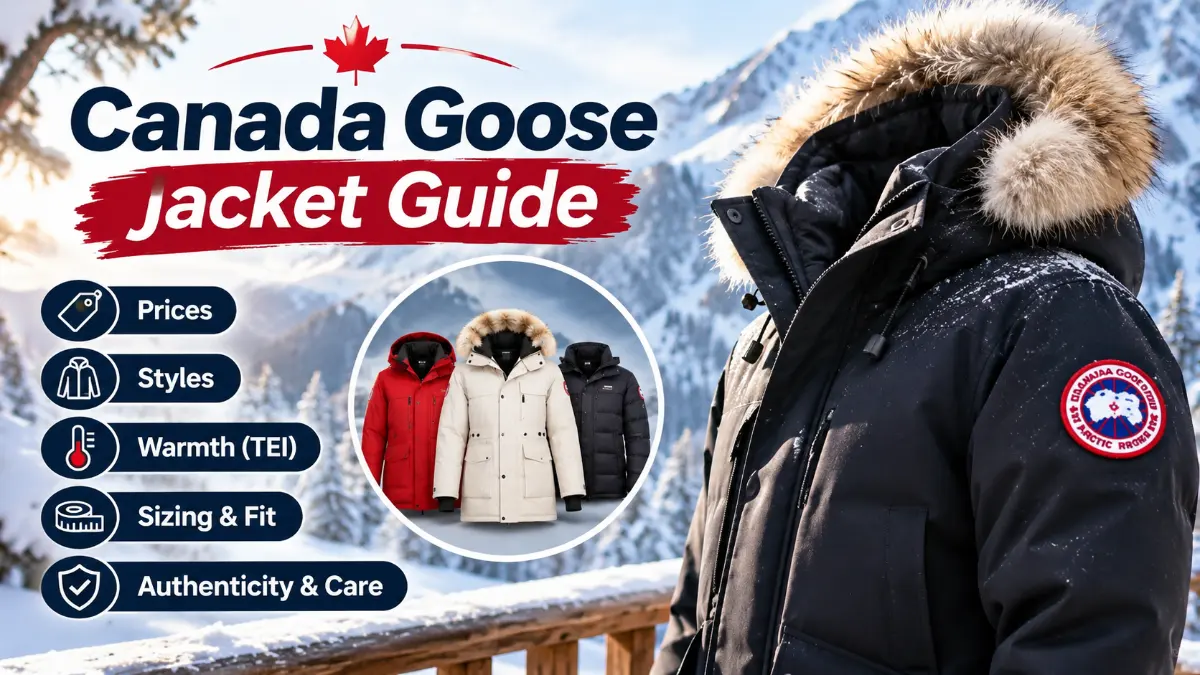
A Canada Goose jacket is a luxury winter coat designed to provide insulation, comfort, and protection in cold weather. The brand offers lightweight puffers, everyday winter jackets, bomber styles, and heavily insulated parkas. In the United States, popular models range from the $925 Crofton Jacket to the $1,895 Expedition Parka, based on November 2026 listings. Choosing the right jacket depends on your local climate, daily activities, preferred fit, and budget.
Not every Canada Goose coat is intended for freezing Arctic conditions. Some designs are better suited to commuting, travel, and relatively mild winters, while others provide substantial insulation for prolonged exposure to extreme cold. Understanding these differences can help you avoid paying for warmth or features you don’t actually need.
What Makes Canada Goose Jackets Different?
Canada Goose is recognized for its premium outerwear, particularly insulated parkas designed for demanding winter environments. Its jackets combine functional construction, specialized fabrics, and designs intended for different temperatures.
Several features distinguish its winter clothing:
- Down insulation: Many models use down filling to trap warm air and help reduce body heat loss.
- Weather protection: Selected jackets feature wind-resistant construction and water-repellent exterior fabrics.
- Cold-weather design: Depending on the model, features may include insulated hoods, adjustable cuffs, storm flaps, and protective collars.
- Different insulation levels: The brand offers lighter jackets for everyday activities alongside parkas intended for severe winter conditions.
- Multiple fits: Buyers can choose from shorter jackets, streamlined silhouettes, longer parkas, and oversized designs.
However, these features differ between products. A lightweight jacket will not necessarily provide the same protection as a full-length winter parka.
Canada Goose Jacket Prices in the USA
Canada Goose jackets generally fall into the premium and luxury price categories. While some lightweight outerwear costs less than $1,000, heavily insulated parkas can exceed $1,800.
Here are five models from the official Canada Goose US outerwear collection.
| Jacket Model | Listed US Price | Warmth Rating | Main Advantage |
| Crofton Jacket | $925 | TEI 1 | Lightweight insulation |
| Chilliwack Bomber | $1,375 | TEI 3 | Shorter winter-ready design |
| Wyndham Parka | $1,525 | TEI 3 | Everyday cold-weather coverage |
| Cypress Puffer | $1,295 | TEI 4 | Warmth with a puffer silhouette |
| Expedition Parka | $1,895 | TEI 5 | Extreme cold-weather protection |
Prices reflect November 2026 US listings and may change with availability, product variations, or retailer pricing.
These jackets serve different purposes, so the most expensive option isn’t automatically the best purchase.
Popular Canada Goose Jacket Styles Explained
Crofton Jacket: Lightweight and Travel-Friendly
The Crofton Jacket is designed for people who want insulation without the bulk of a traditional winter parka.
With a TEI 1 rating, it is intended for relatively mild cold-weather conditions. Its lighter construction makes it worth considering for travel, outdoor activities, or everyday situations where unrestricted movement matters.
However, it may not provide enough insulation for prolonged exposure to severe cold without additional layers.
Chilliwack Bomber: Classic Winter Style
The Chilliwack Bomber is one of Canada Goose’s recognizable designs, featuring a shorter silhouette inspired by aviation clothing.
Its TEI 3 rating indicates considerably more insulation than the brand’s lightweight models. The shorter length can be convenient for driving, walking, and daily activities.
The trade-off is reduced lower-body coverage compared with longer parkas, particularly when standing outdoors in strong winds.
Wyndham Parka: Everyday Winter Protection
The Wyndham Parka is designed for buyers who want substantial warmth in a relatively streamlined winter jacket.
Its TEI 3 rating makes it suitable for colder everyday conditions. It can be a practical option for commuting or spending time outside during winter without choosing an oversized expedition-style coat.
As with any insulated jacket, check the fit carefully when planning to wear multiple layers.
Cypress Puffer: Warmth With a Different Silhouette
The Cypress Puffer combines the appearance of a puffer jacket with a TEI 4 warmth rating.
Its design is worth considering for buyers who prefer puffer styling but still need significant protection against cold temperatures.
Because the fit and proportions differ from traditional parkas, compare the overall length and coverage before purchasing.
Expedition Parka: Designed for Extreme Cold
The Expedition Parka is one of the brand’s most heavily insulated jackets.
Originally developed for scientists working in Antarctica, this model has a TEI 5 rating, the highest category in Canada Goose’s warmth system.
Its design includes features such as an adjustable down-filled hood, protective cuffs, a snow skirt, and multiple storage pockets.
At $1,895, it represents a substantial investment. Its insulation and construction are most relevant to people who routinely encounter exceptionally cold environments rather than ordinary mild winters.
Read Also: Moose Knuckles Jackets: Stirling, Cloud, Parkas and Bombers Compared
How to Choose the Right Canada Goose Jacket for Your Climate
Buying winter outerwear based only on appearance can leave you with a jacket that feels too warm or doesn’t provide enough protection.
Canada Goose uses its Thermal Experience Index (TEI) to help buyers compare insulation levels.
| TEI Rating | Manufacturer’s Temperature Guidance |
| TEI 1 | 41°F to 23°F (5°C to −5°C) |
| TEI 2 | 32°F to 5°F (0°C to −15°C) |
| TEI 3 | 14°F to −4°F (−10°C to −20°C) |
| TEI 4 | 5°F to −13°F (−15°C to −25°C) |
| TEI 5 | −22°F (−30°C) and below |
These are manufacturer-defined guidelines, not guarantees of personal comfort. Wind, moisture, physical activity, and clothing layers can significantly influence how warm you feel.
For example, someone walking briskly through a city may require less insulation than a person standing outdoors for extended periods.
Also, a higher TEI rating doesn’t establish that a jacket is waterproof. Always check its separate weather-resistance specifications.
Canada Goose Jackets for Men and Women: Sizing Tips
Canada Goose produces jackets in different cuts, lengths, and fits. Choosing the correct size is especially important because an overly tight jacket can restrict movement, while an excessively loose one may feel uncomfortable.
Before ordering, use the manufacturer’s size guide and check the individual product’s fit recommendations.
Pay particular attention to chest measurements, shoulder movement, sleeve length, and whether you’ll wear thick sweaters underneath.
Some designs intentionally run large. For example, the Expedition Parka is listed with advice to size down. That guidance should not be applied to every Canada Goose product.
When possible, try the jacket with the same type of clothing you expect to wear during winter.
How to Identify an Authentic Canada Goose Jacket
Counterfeit winter jackets can resemble genuine luxury products, making it important to purchase carefully.
Canada Goose uses distinctive branding, product labels, and authenticity holograms. However, appearance alone cannot guarantee authenticity because counterfeiters can imitate visible details.
The company’s official authenticity guidance recommends purchasing through authorized retailers.
Before buying, examine the seller’s credentials, product information, return conditions, and proof of purchase. Be especially cautious when a new jacket is advertised at an unusually low price.
For secondhand purchases, check the garment’s condition and seller documentation. Don’t assume that a photograph of a hologram proves authenticity.
Canada Goose Jacket Care and Maintenance
Proper cleaning and storage can help maintain a jacket’s appearance, insulation, and functionality.
Canada Goose provides different care instructions depending on the type of garment. Its official product care guidance distinguishes traditional down-filled parkas from lightweight jackets and shells.
Down-filled parkas generally require professional dry cleaning. Some lightweight garments can be machine-washed, but only according to their specific care labels.
Before storing a jacket for the warmer months, make sure it is clean and dry. Hang structured parkas in a suitable location rather than compressing them into tightly packed spaces for extended periods.
The brand also offers warranty coverage for eligible manufacturing defects. Normal wear, accidental damage, and improper care may be excluded. Check the warranty terms applicable to your purchase rather than assuming every type of damage is covered.
Is a Canada Goose Jacket Worth Buying?
The answer depends on how much use you’ll get from its insulation, construction, and design.
A Canada Goose jacket may be a reasonable investment if you live somewhere with long, cold winters or frequently spend significant time outdoors. Choosing the correct model can provide useful protection without requiring unnecessary layers.
However, buyers in warmer climates may find the price difficult to justify. A heavily insulated parka can be excessive for short trips between heated buildings.
It’s also worth comparing other premium winter outerwear brands before deciding. Consider actual warmth requirements, ease of maintenance, fit, and long-term affordability rather than relying on the brand name alone.
Frequently Asked Questions
1. What is the cheapest Canada Goose jacket?
Prices depend on the collection and garment type. In the November 2026 US listings reviewed, the Crofton Jacket costs $925, while the Lodge Jacket is listed at $895. Vests and other outerwear products may cost less. These examples do not establish the lowest price across every available product.
2. Are Canada Goose jackets good for everyday winter wear?
Yes, several models are designed for daily winter activities. Lightweight jackets may be suitable for commuting and relatively mild conditions, while TEI 3 models provide more insulation for colder weather. The best choice depends on your climate and activity level.
3. Do Canada Goose jackets run true to size?
Sizing varies by model. Some jackets have a regular or slim fit, while others are intentionally oversized. Check the specific product’s measurements and fit advice before purchasing rather than assuming your usual size will work.
4. Can you wear a Canada Goose jacket in the rain?
Some Canada Goose jackets have water-resistant fabrics, but not every model is waterproof. Light precipitation may be manageable with certain designs, while prolonged heavy rain can require dedicated waterproof outerwear.
5. Are Canada Goose jackets made with real down?
Many Canada Goose insulated jackets use real down filling, although materials and insulation specifications vary by product. Check the individual jacket’s filling and construction details for accurate information.