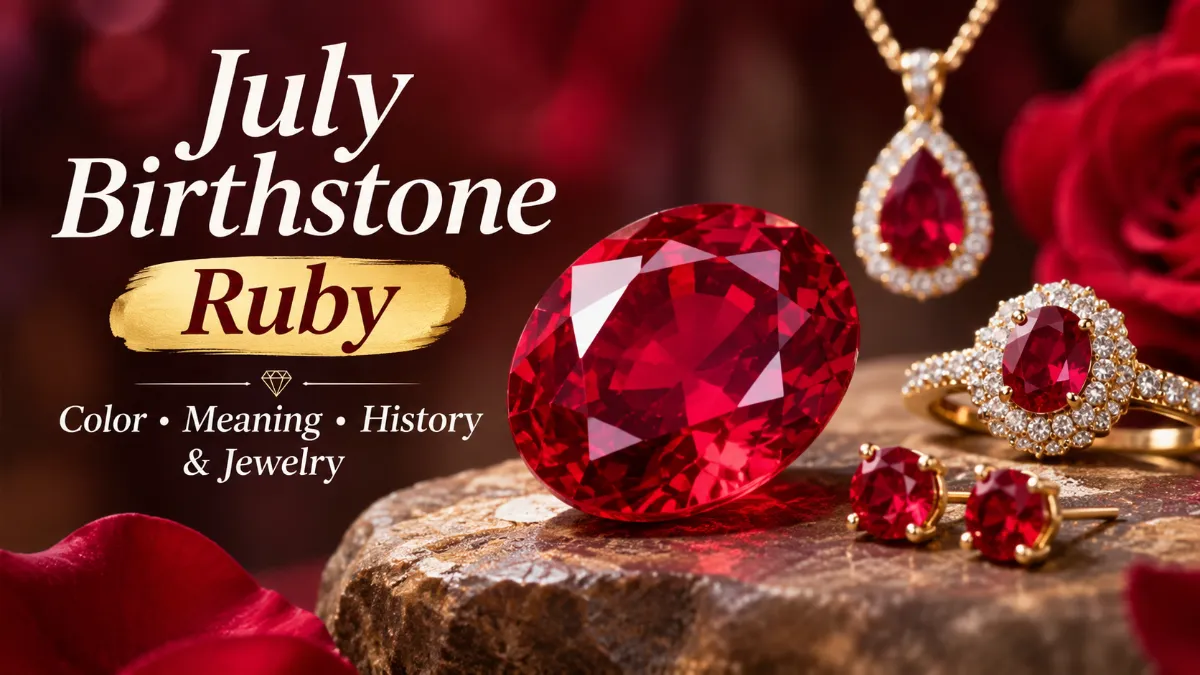
The July birthstone is ruby, a precious red gemstone traditionally associated with love, passion, courage, power, and protection. Recognized as both the traditional and modern birthstone for July, ruby gets its distinctive color primarily from chromium within the mineral corundum. With a hardness of 9 on the Mohs scale, it is among the most durable gemstones used in fine jewelry, making it a popular choice for birthday gifts, rings, necklaces, and earrings.
For someone born in July, ruby jewelry can be a meaningful birthday gift. Its rich color, historical symbolism, and durability make it suitable for special occasions and everyday wear. The American Gem Society recognizes ruby as July’s official birthstone.
What Is the July Birthstone?
Ruby belongs to the corundum mineral family, which also includes sapphire. Corundum occurs in several colors, but its red variety is classified as ruby. Other colors are generally classified as sapphire.
Trace amounts of chromium give rubies their characteristic red color. Depending on their composition and internal characteristics, these gemstones can range from lighter red to rich, vivid red, sometimes with slightly purplish undertones.
Rubies have been valued for centuries because of their color, rarity, and durability. Fine-quality natural stones can be especially expensive, although prices vary considerably based on individual characteristics.
Here is a quick overview of the July birthstone:
| Feature | Ruby Birthstone Details |
| Gemstone | Ruby |
| Birth Month | July |
| Color | Red, including slightly purplish red |
| Mineral Family | Corundum |
| Chemical Formula | Al₂O₃ |
| Main Coloring Element | Chromium |
| Mohs Hardness | 9 |
| Traditional Meaning | Love, passion, courage, and protection |
| Common Jewelry | Rings, necklaces, earrings, and bracelets |
July Birthstone Meaning and Symbolism
The July birthstone meaning centers on love, passion, strength, and protection. Ruby’s intense red color has long been associated with the heart, fire, and vitality, giving it a special place in gemstone traditions.
Across different cultures, ruby has represented several qualities:
- Love and passion: Ruby symbolizes romantic love, devotion, and strong emotions, making it a meaningful gift between partners.
- Courage and strength: Its bold color has traditionally represented bravery, confidence, and personal power.
- Protection: Some cultures believed rubies could protect their wearers from danger or misfortune.
- Prosperity and status: Rubies have adorned royal jewelry and valuable ornaments, reflecting wealth, influence, and prestige.
These meanings come from historical beliefs and cultural traditions. There is no scientific evidence that wearing ruby provides supernatural protection, improves health, or changes someone’s fortune.
History of the Ruby Birthstone
Rubies have been prized for thousands of years. In ancient India, they were regarded as exceptionally valuable gemstones and were associated with power, wealth, and protection.
Myanmar, formerly known as Burma, became famous for producing highly prized rubies. During the Middle Ages, Europeans also associated the gemstone with prosperity, wisdom, and protection.
The name ruby comes from the Latin word ruber, meaning red. This connection between the gemstone’s color and its cultural significance appears throughout ruby’s history and traditional lore.
Ruby’s association with July developed through birthstone traditions that were eventually standardized in modern jewelry lists.
July Birthstone Color: Why Is Ruby Red?
The July birthstone color is red, although individual rubies can look quite different. Some display a bright, lively red, while others have deeper tones or slightly purplish coloring.
Chromium is primarily responsible for this coloration. The amount of chromium, other trace elements, and the stone’s internal characteristics all influence its appearance.
Gemologists describe ruby color using three main characteristics:
- Hue: The dominant color and any noticeable purple or orange modifiers.
- Tone: The relative lightness or darkness of the gemstone.
- Saturation: The strength or intensity of its color.
In the gemstone trade, pigeon’s blood describes a particularly prized vivid red appearance. However, the term can be interpreted differently by sellers and gemological laboratories. It is a color designation, not a separate variety of ruby.
Color is usually the most important factor affecting a ruby’s value. According to established ruby quality factors, vivid red stones with attractive saturation often command higher prices than duller stones of otherwise comparable quality.
Ruby Gemstone Properties and Durability
Ruby is composed primarily of aluminum oxide (Al₂O₃) and belongs to the corundum mineral family. Its hardness rating of 9 on the Mohs scale places it below diamond, which has a rating of 10.
This high hardness makes ruby resistant to scratching during normal jewelry use.
However, scratch resistance does not mean a ruby is impossible to damage. A strong impact can still chip or fracture the stone, especially if it contains significant fractures or certain treatments.
Ruby’s combination of hardness and toughness makes it suitable for everyday jewelry, including rings. A secure setting and reasonable care help protect the gemstone from accidental damage.
July Birthstone Jewelry and What Affects Ruby’s Value
Ruby birthstone jewelry is popular for its striking red color, which pairs well with yellow gold, white gold, platinum, and silver settings.
Popular choices include:
- Ruby rings: Often chosen for birthday gifts, anniversaries, and statement jewelry.
- Ruby necklaces: Pendants and delicate necklaces offer a simple way to showcase the gemstone.
- Ruby earrings: Studs and drop earrings work well for everyday outfits and formal occasions.
- Ruby bracelets: Ruby accents add color to both minimalist and decorative bracelet designs.
What Determines a Ruby’s Value?
Several factors influence how much a ruby is worth.
Color: Rich, vivid red is generally the most desirable coloration. Stones with strong saturation and balanced tone often command higher prices.
Clarity: Most natural rubies contain inclusions. Their size, visibility, and effect on transparency or durability influence value.
Cut: A well-cut ruby displays its color attractively while maintaining good brightness and proportions.
Carat weight: Larger, fine-quality rubies are relatively rare and can cost substantially more per carat than comparable smaller stones.
Origin and treatments: A documented geographic origin may affect market value, but it does not guarantee quality. Treatments also influence price because untreated rubies and stones with different enhancements may be valued differently.
Heat treatment is common in the ruby market. Some stones undergo additional processes, such as fracture filling, which can affect their appearance, durability, and value.
Before purchasing an expensive ruby, ask about treatments and consider obtaining an independent gemological report. A reputable ruby buying guide can also help buyers understand the characteristics that influence quality.
Natural vs. Lab-Grown Ruby
Natural rubies form through geological processes within the Earth. Lab-grown rubies, by contrast, are produced under controlled laboratory conditions.
Both are genuine rubies with essentially the same chemical composition, crystal structure, and fundamental physical properties.
Their main difference is origin. Natural rubies are valued partly for their geological rarity, while lab-grown rubies generally cost less than comparable fine-quality natural stones.
Neither should be confused with imitation gemstones. An imitation may resemble ruby but be made from glass or another material with different properties.
Read Also: Cute Nails: 45 Wearable Nail Design Ideas by Style & Occasion
How to Clean and Care for Ruby Jewelry
Untreated and conventionally heat-treated rubies can generally be cleaned with warm water, mild soap, and a soft brush, provided they have no vulnerable fractures or sensitive enhancements.
For suitable ruby jewelry, follow these steps:
- Mix a small amount of mild soap with warm water.
- Gently clean the gemstone using a soft brush.
- Rinse carefully and dry with a lint-free cloth.
- Store ruby jewelry separately to reduce the risk of scratches and accidental damage.
Rubies that have been glass-filled, fracture-filled, cavity-filled, or dyed require extra care. These stones should generally be cleaned only with a soft, damp cloth rather than soaked or scrubbed.
Avoid harsh chemicals and strong impacts. Sudden temperature changes should also be avoided, particularly when the stone has sensitive treatments or existing fractures.
Ultrasonic and steam cleaners may be suitable for some untreated or conventionally heat-treated rubies, but they are not safe for every treated gemstone.
If you are unsure whether your ruby has been treated, consult a qualified jeweler before using specialized cleaning equipment. Following appropriate ruby care and cleaning recommendations can help protect both the gemstone and its setting.
Frequently Asked Questions
1. What is the official birthstone for July?
Ruby is the official traditional and modern birthstone for July in the standard American birthstone tradition. This red variety of corundum is valued for its vibrant color, durability, and centuries-old cultural significance.
2. Does July have more than one birthstone?
Ruby is the recognized birthstone for July in standard American birthstone lists. Alternative cultural or commercial lists sometimes mention other gemstones, but ruby remains the established traditional and modern choice.
3. What does the July birthstone symbolize?
Ruby traditionally represents love, passion, courage, strength, and protection. Its red color has inspired these associations across different cultures. However, the meanings are symbolic rather than scientifically proven effects.
4. Can you wear a ruby birthstone every day?
Yes. Ruby’s Mohs hardness of 9 makes it suitable for many everyday jewelry designs, including rings, earrings, and necklaces. Although resistant to scratching, it can still chip or fracture under strong impact. Secure settings and careful handling are recommended.
5. Is a natural ruby better than a lab-grown ruby?
Neither is necessarily better for everyone. Natural rubies are valued for their geological origin and rarity, while lab-grown rubies offer essentially the same fundamental gemstone properties at generally lower prices. Your choice depends on your budget, preferences, and whether natural origin matters to you.