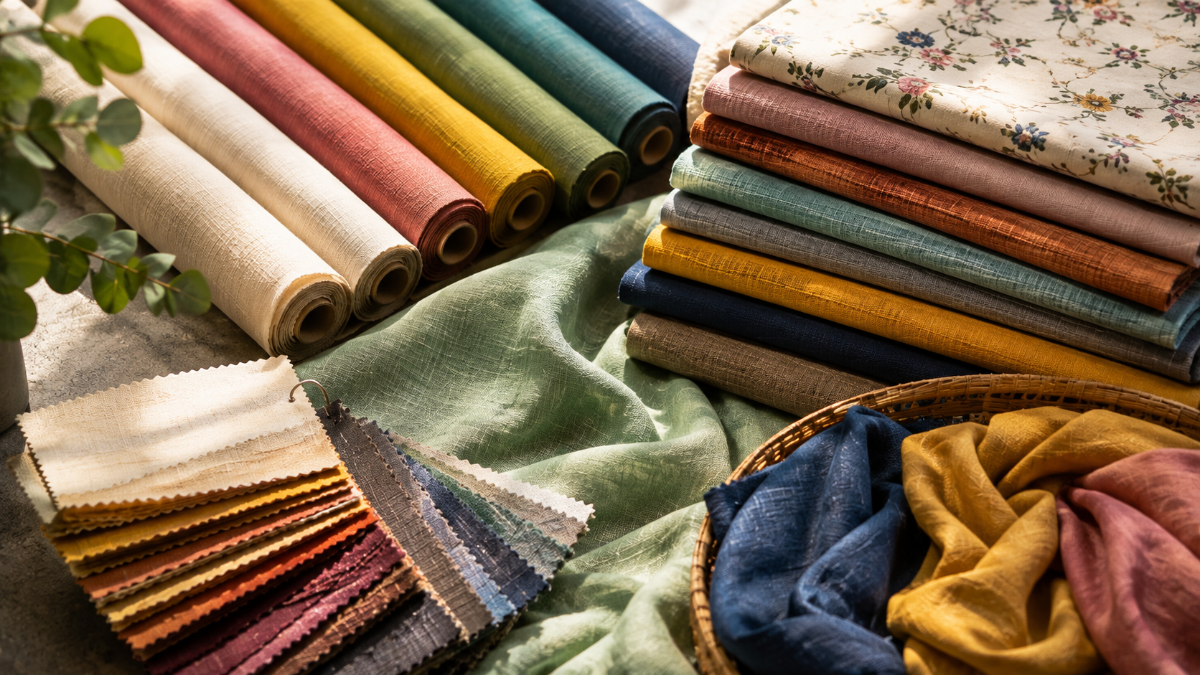
Fabric is a flexible textile material made from fibers, yarns, or bonded fiber webs. Its performance is shaped by a simple chain: fiber → yarn → construction → finish → properties → end use.
That Fabric: A Complete Guide to Types, Fibers, Construction, Properties, and Uses
Textile material is a flexible, manufactured good made from fibers, yarns, or bonded fiber webs. Its performance follows a simple chain: fiber → yarn → construction → finish → properties → end use.
That is why cotton can become crisp poplin, rugged denim, absorbent terry cloth, or soft T-shirt jersey. The fiber stays the same; the yarn, construction, weight, and finishing change how the final material looks, feels, stretches, drapes, wears, and washes.
Classification at a Glance
Textiles can be classified in several ways. A useful guide explains all of them rather than treating every cloth name as if it were a fiber.
| Classification | Examples | What it tells you |
| By fiber | Cotton, linen, wool, silk, polyester | The raw material |
| By yarn | Spun, filament, textured, plied yarn | Surface, strength, softness |
| By construction | Woven, knitted, nonwoven | How the material is formed |
| By weave | Plain weave, twill, satin, jacquard | Interlacing structure |
| By knit | Jersey, rib, interlock, tricot | Knitted loop structure |
| By surface | Velvet, corduroy, terry, fleece | Texture or raised pile |
| By finish | Brushed, mercerized, coated, calendared | Surface or performance treatment |
| By weight | Lightweight, medium-weight, heavyweight | Thickness, opacity, drape |
| By use | Shirting, suiting, upholstery, activewear | Intended application |
What Is a Fabric?
A fabric is a manufactured textile assembly with enough cohesion and strength to be used as a flexible sheet material. It is commonly made by weaving or knitting yarns, while nonwoven material is made directly from fibers without first producing yarn.
This textile category is used in clothing, bedding, upholstery, curtains, bags, medical products, sportswear, industrial materials, filtration, and technical goods.
Read More: Purple Flowers
Fiber, Yarn, Cloth, and Textile
| Term | Meaning | Example |
| Fiber | Basic textile raw material | Cotton staple, wool fiber, polyester filament |
| Yarn | Continuous strand of fibers or filaments | Cotton thread, knitting yarn |
| Cloth | Flexible material made from yarns, fibers, or webs | Denim, satin, felt, jersey |
| Textile | Broad term for fibers, yarns, cloth, and related products | A roll of material, towel, garment, or carpet |
Fabric How Textile Material Is Made
Most cloth moves through a sequence from raw fiber to finished goods.
- Fiber sourcing: Fibers may come from plants, animals, cellulose feedstocks, or synthetic polymers.
- Fiber preparation: Fibers are cleaned, aligned, blended, carded, or otherwise prepared.
- Yarn formation: Staple fibers are spun into yarn; synthetic filaments may be used directly or textured.
- Sheet formation: Yarns are woven or knitted, while nonwovens are bonded or entangled directly from fibers.
- Dyeing or printing: Color may be added to fiber, yarn, cloth, or the finished garment.
- Finishing: Treatments can alter softness, luster, shrinkage, wrinkle resistance, water resistance, or other properties.
- Inspection: The material is checked for defects, dimensions, color consistency, and required performance.
- Product manufacturing: The material is cut, sewn, laminated, upholstered, or converted into a final product.
Types by Fiber
Textile fibers are broadly divided into natural fibers, regenerated cellulosic fibers, and synthetic fibers.
Natural fibers
Natural fibers come from plants or animals. They include cellulosic plant fibers such as cotton and linen, and protein-based animal fibers such as wool and silk.
| Fiber | Source | Main properties | Common uses |
| Cotton | Cotton plant | Soft, absorbent, versatile | T-shirts, denim, bedding, towels |
| Linen | Flax stem | Breathable, crisp, strong | Summer clothing, curtains, table linens |
| Hemp | Plant stem | Strong, breathable, textured | Apparel, bags, canvas-like cloth |
| Wool | Sheep fleece | Insulating, resilient, warm | Coats, suits, blankets, knitwear |
| Silk | Silkworm filament | Smooth, lustrous, drapable | Dresses, scarves, blouses |
| Cashmere | Goat hair | Fine, soft, warm | Luxury knitwear, scarves |
| Jute | Plant stem | Coarse, strong, economical | Rugs, sacks, backing material |
| Coir | Coconut husk | Stiff, durable | Mats and floor coverings |
Cotton. Cotton is one of the most versatile textile fibers. It can be woven into poplin, broadcloth, denim, twill, muslin, canvas, chambray, and terry cloth, or knitted into jersey, rib, interlock, and fleece. Cotton is generally soft and absorbent, but it can wrinkle and may shrink unless preshrunk. Its final feel depends heavily on yarn quality, sheet density, weave or knit construction, and finishing.
Linen. Linen comes from flax and is valued for breathability, strength, and a naturally textured appearance. It is widely used for warm-weather clothing, bedding, curtains, and table textiles. Linen wrinkles easily because it has relatively low elasticity. Linen-cotton and linen-viscose blends can reduce severe creasing while retaining much of linen’s breathable character.
Wool. Wool is an insulating fiber with natural crimp, which helps create loft and resilience. It may be made into suiting, flannel, tweed, coating material, felt, blankets, or knitwear. Different wool types vary considerably. Merino is often fine and soft; alpaca is known for warmth and lightness; cashmere is fine and luxurious; mohair has luster and resilience. Wool requires suitable care because heat, moisture, and agitation can cause shrinkage or felting.
Silk. Silk is a natural filament fiber known for smoothness, luster, and elegant drape. It can become sheer chiffon, crisp organza, textured crepe, smooth satin, or heavier dupioni. Silk is not one uniform category. Its strength, transparency, durability, and care needs depend on the specific construction, weight, and finish.
Regenerated cellulosic fibers
Regenerated cellulosic fibers are manufactured from natural cellulose, often from wood pulp or other plant sources. Rayon, viscose, modal, lyocell, acetate, and triacetate are common examples.
| Fiber | Typical character | Common uses |
| Viscose/rayon | Soft, absorbent, fluid drape | Dresses, blouses, linings |
| Modal | Smooth, soft, flexible | Underwear, T-shirts, loungewear |
| Lyocell | Smooth, absorbent, soft | Shirts, dresses, bedding |
| Acetate | Lustrous, silk-like | Linings, occasionwear |
| Triacetate | Shape-retentive, crease-resistant | Pleated garments, tailoring |
Viscose is a widely used type of rayon. Rayon is the broader category, while modal and lyocell are related regenerated cellulosic fibers with different manufacturing processes and performance characteristics.
Synthetic fibers
Synthetic fibers are manufactured polymers. They are commonly selected for strength, quick drying, wrinkle resistance, stretch, or abrasion resistance.
| Fiber | Main properties | Common uses |
| Polyester | Durable, quick-drying, wrinkle-resistant | Apparel, activewear, fleece, upholstery |
| Nylon | Strong, light, abrasion-resistant | Bags, hosiery, swimwear, outerwear |
| Acrylic | Lightweight, warm, wool-like | Sweaters, blankets, faux fur |
| Elastane/spandex | High stretch and recovery | Leggings, swimwear, fitted clothing |
| Olefin/polypropylene | Lightweight, moisture-resistant | Carpets, insulation, technical goods |
| Aramid | Strong and heat-resistant | Protective and industrial materials |
Blended materials
Blended materials combine two or more fiber types. A blend may improve durability, stretch, wrinkle resistance, softness, drying speed, or cost efficiency.
- Cotton-polyester: Softness and absorbency balanced with durability and easier care.
- Cotton-elastane: Stretch added to denim, shirts, trousers, and fitted garments.
- Wool-nylon: Improved abrasion resistance for socks and durable knitwear.
- Linen-cotton: Softer hand and potentially less wrinkling than pure linen.
- Polyester-viscose: Often used in tailored garments, uniforms, and dresses.
- Nylon-elastane: Common in activewear, swimwear, and compression garments.
Types by Construction
Construction is the method used to turn fibers or yarns into a finished sheet material. The main types are woven, knitted, and nonwoven.
Woven cloth
Woven cloth is made by interlacing two yarn systems at right angles. The lengthwise yarns are the warp; the crosswise yarns are the weft. Wovens are generally stable and less stretchy than knits. Their density and behavior depend on yarn size, weave pattern, ends per inch, picks per inch, fiber content, and finishing.
- Ends per inch (EPI): Number of warp yarns in one inch.
- Picks per inch (PPI): Number of weft yarns in one inch.
| Weave | Structure | Typical properties | Common uses |
| Plain weave | Simple over-under interlacing | Stable, balanced, versatile | Poplin, muslin, broadcloth, canvas |
| Twill | Diagonal yarn pattern | Durable, drapable | Denim, chino, gabardine |
| Satin weave | Long surface floats | Smooth, lustrous | Eveningwear, linings, dresses |
| Dobby | Small woven pattern | Textured or decorative | Shirts, towels, home textiles |
| Jacquard | Pattern woven into cloth | Detailed, dimensional | Brocade, damask, upholstery |
| Pile weave | Raised loops or cut pile | Soft or textured surface | Velvet, corduroy, terry cloth |
Knitted goods
Knitted goods are made by interlocking yarn loops. This structure usually makes knits more flexible and stretchable than wovens. Vertical columns of knit loops are called wales, while horizontal rows are called courses. Knitted material can stretch from its loop structure even without elastane; elastane improves recovery and helps garments maintain shape.
| Knit type | Typical character | Common uses |
| Single jersey | Lightweight, soft, flexible | T-shirts, dresses, underwear |
| Rib knit | Vertical ribs, high crosswise stretch | Cuffs, neckbands, fitted tops |
| Interlock | Smooth, stable, double-knit structure | Polo shirts, babywear, basics |
| French terry | Smooth face, looped back | Sweatshirts, casualwear |
| Fleece | Brushed, soft, insulating | Hoodies, jackets, loungewear |
| Piqué | Textured, breathable | Polo shirts |
| Tricot | Fine warp-knit structure | Lingerie, linings, sportswear |
| Mesh | Open construction | Activewear and ventilation panels |
Nonwoven material
Nonwoven material is made by bonding, felting, or entangling fibers directly, rather than weaving or knitting yarns. Mechanical, thermal, and chemical methods can be used. Common processes include needle punching, spunbonding, meltblowing, thermal bonding, and chemical bonding. This category is widely used for interlining, felt, wipes, filters, medical materials, insulation, geotextiles, and disposable products.
Woven vs. Knit vs. Nonwoven
| Feature | Woven | Knit | Nonwoven |
| Formation | Interlaced warp and weft yarns | Interlocking yarn loops | Bonded or entangled fibers |
| Typical stretch | Low to moderate | Moderate to high | Highly variable |
| Shape stability | Generally high | Flexible and body-conforming | Highly variable |
| Examples | Denim, poplin, twill, satin | Jersey, rib, fleece, piqué | Felt, interfacing, filters |
| Common uses | Shirts, trousers, upholstery | T-shirts, sportswear, knitwear | Medical, industrial, craft products |
Common Names Explained
Many textile names describe a structure or surface rather than the fiber itself.
- Fiber-based names: Cotton, linen, wool, silk, polyester, nylon, acrylic, viscose, modal, and lyocell are fiber names.
- Weave-based names: Plain weave, twill, satin, dobby, jacquard, and basket weave refer to woven construction. Satin may be made from silk, polyester, nylon, or rayon.
- Knit-based names: Jersey, rib, interlock, piqué, tricot, and ponte describe knitted constructions. A jersey may be cotton, polyester, viscose, wool, or a blend.
- Surface-based names: Velvet, corduroy, terry, fleece, chenille, boucle, and flannel describe surface texture, pile, loops, brushing, or yarn effects.
- Application-based names: Shirting, suiting, upholstery material, lining cloth, outdoor textile, and technical textile describe common use rather than one exact fiber or construction.
Properties That Matter
| Property | Meaning | Why it matters |
| Breathability | Ability of air to pass through the material | Important for heat comfort |
| Absorbency | Ability to take in moisture | Affects feel, dyeing, drying |
| Wicking | Movement of moisture across the surface | Useful in sportswear |
| Drying rate | How quickly moisture leaves the material | Important for travel and exercise |
| Drape | How the material hangs | Important for dresses and curtains |
| Stretch | Ability to extend | Supports movement and fitted shapes |
| Recovery | Ability to return to shape | Helps prevent bagging |
| Abrasion resistance | Resistance to rubbing wear | Important for upholstery and bags |
| Pilling resistance | Resistance to fiber balls on the surface | Important for knits and fleece |
| Dimensional stability | Ability to retain size and shape | Relates to shrinkage and distortion |
| Opacity | Ability to block light | Important for clothing and curtains |
| GSM | Weight in grams per square meter | Helps compare similar materials |
Breathability vs. absorbency vs. wicking
These terms are not interchangeable. Breathability is how readily air moves through the material. Absorbency is how much liquid moisture the fiber or cloth takes in. Wicking is how moisture spreads or moves through the material. Drying rate is how quickly moisture evaporates or leaves it.
Cotton towels are absorbent but can dry slowly. Polyester sportswear usually absorbs little liquid into the fiber but may spread moisture over a wider area to help it evaporate.
Comparison Chart
Actual performance depends on construction, weight, yarn type, finishing, and blend percentage. This table provides a general guide.
| Fiber/type | Breathability | Stretch | Durability | Wrinkle tendency | Care difficulty | Common uses |
| Cotton | High | Low to moderate | Moderate to high | Moderate | Easy to moderate | Shirts, T-shirts, bedding |
| Linen | High | Low | High | High | Moderate | Summer clothing, home textiles |
| Wool | Moderate | Low to moderate | High | Low to moderate | Moderate to high | Coats, suits, knitwear |
| Silk | Moderate | Low | Variable | Variable | High | Dresses, scarves, blouses |
| Polyester | Variable | Variable | High | Low | Easy | Activewear, fleece, upholstery |
| Nylon | Variable | Variable | Very high | Low | Easy | Bags, outerwear, hosiery |
| Viscose | Variable | Low to moderate | Variable | Moderate to high | Moderate | Dresses, blouses, linings |
| Lyocell | High | Low to moderate | Variable | Moderate | Moderate | Shirts, bedding, dresses |
| Acrylic | Moderate | Low to moderate | Moderate | Low | Easy | Sweaters, blankets |
| Elastane blend | Depends on base fiber | High | Variable | Variable | Moderate | Leggings, swimwear |
How to Identify an Unknown Material
An at-home inspection can help narrow possibilities, but it cannot always confirm exact fiber content. Professional fiber identification may use microscopy and other specialized testing methods.
- Check the label: Fiber content, blend percentages, care instructions, and product information are the best starting point.
- Identify the construction: Look for warp and weft yarns in woven cloth, loops in knitted goods, or bonded fibers in nonwoven material.
- Examine the surface: Diagonal lines suggest twill; a smooth, lustrous face may indicate satin weave; raised pile may indicate velvet, terry, corduroy, or fleece.
- Test stretch and recovery: Gently stretch in width, length, and diagonal directions, then assess whether it returns to its original form.
- Assess drape: Crisp materials hold shape; fluid ones fall in softer folds.
- Inspect edges: Woven cloth has a selvedge; single jersey often curls at cut edges.
- Estimate weight: Compare it with known lightweight, medium-weight, or heavyweight goods.
- Avoid casual burn tests: Unknown material may contain finishes, blends, coatings, or fibers that create unsafe fumes. Burn tests are not a universally reliable home identification method.
Choosing Material by Use
Hot weather. Lightweight linen, cotton voile, cotton poplin, chambray, lightweight lyocell, and some viscose materials can work well in warm conditions. Fit and construction matter: a loose, airy shirt may feel cooler than a fitted garment made from the same fiber.
Winter. Wool, fleece, brushed flannel, heavyweight knitwear, quilted goods, and layered technical textiles provide useful insulation. Wool is a versatile choice for sweaters, coats, socks, and suiting, while fleece is commonly used for lightweight warmth.
T-shirts. Cotton jersey is a popular choice for softness and absorbency. Cotton-modal blends can feel smooth; cotton-polyester blends may dry faster and hold shape better; polyester-elastane knits suit activewear.
Dresses. Choose based on the desired silhouette. Poplin, taffeta, and structured cotton suit defined shapes; silk, viscose, crepe, and satin create fluid drape; jersey offers stretch and comfort; chiffon and georgette work for sheer layers.
Trousers. Cotton twill, denim, gabardine, wool suiting, ponte knit, and stretch blends are common choices. Consider abrasion resistance, opacity, wrinkle behavior, and recovery around the knees and seat.
Bedsheets. Cotton percale, cotton sateen, linen, and lyocell are widely used for bedding. Percale often feels crisp, sateen smoother, linen textured and airy, and lyocell soft with fluid drape.
Curtains. Consider drape, privacy, light control, fading, and cleaning. Linen blends and cotton offer natural texture; velvet creates a heavier look and helps block light; polyester is often selected for easy care and stability.
Upholstery and bags. Choose materials with appropriate weight, abrasion resistance, seam strength, and cleanability. Canvas, tightly woven polyester, chenille, jacquard, denim, and coated materials may suit different projects.
Beginner sewing. Stable, medium-weight woven cotton is typically easiest for beginners. Quilting cotton, poplin, broadcloth, chambray, and cotton-linen blends are generally easier to cut, pin, sew, and press than slippery satin, sheer chiffon, or highly stretchy knits.
Finishes
Finishes are treatments applied after sheet formation to alter appearance, handle, stability, or performance.
- Brushing or napping: Raises fibers for a soft, warm surface, as in flannel and fleece.
- Mercerization: A cotton treatment that can improve luster, dye uptake, and dimensional stability.
- Preshrinking: Helps reduce future shrinkage.
- Calendering: Presses the material to make it smoother, flatter, or shinier.
- Coating or lamination: Can add structure, wind resistance, water resistance, or waterproofing.
- Water-repellent finish: Helps water bead on the surface but does not automatically make the material waterproof.
- Flame-resistant treatment: Used where a required performance standard applies.
- Antimicrobial or odor-control treatment: May be used in socks, activewear, and technical goods.
Frequently Asked Questions
1. What is the difference between fabric and textile?
Textile is the broader term. It includes fibers, yarns, cloth, and finished products such as garments, bedding, carpets, and upholstery. Fabric is the flexible sheet material that is cut, sewn, draped, upholstered, or otherwise turned into products. Cotton is a fiber; cotton thread is a yarn; denim is a woven material; and jeans are a finished product. In casual use, people often use the two terms interchangeably, but textile is technically the broader category.
2. Is satin always silk?
No. Satin describes a weave structure with long yarn floats that create a smooth, lustrous surface. Silk satin is common, but satin can also be made from polyester, nylon, acetate, viscose, or blended fibers. Fiber content determines important differences in softness, shine, cost, breathability, static, care, and durability. A polyester version can look similar to a silk one from a distance but usually behaves differently in moisture and laundering. Always check the fiber label rather than assuming satin means silk.
3. Is denim a fiber or a woven material?
Denim is a woven material, not a fiber. It is traditionally a cotton twill cloth, recognized by diagonal ribs created through the twill weave. Classic denim often uses indigo-dyed warp yarns with lighter weft yarns, which helps create its familiar appearance and fading behavior. Modern denim may include cotton with elastane, polyester, lyocell, hemp, or recycled fibers to change stretch, softness, weight, or durability. It is therefore defined mainly by its construction and visual tradition rather than one exact fiber composition.
4. What does GSM mean?
GSM means grams per square meter. It measures the weight of a material and is useful when comparing similar goods, such as two cotton jerseys, two denim types, or two sweatshirt fleeces. Higher GSM usually indicates more material per square meter and often a heavier or more opaque result. However, GSM alone does not define quality, strength, comfort, or warmth. Fiber content, yarn type, knit or weave density, finishing, and intended use all matter. Use GSM as a comparison tool within the same category.
5. How can I tell whether material will be see-through?
Hold it against a strong light or over a contrasting surface to see how much color and shape show through. Opacity depends on weight, color, yarn density, fiber, weave or knit structure, stretch, and moisture. Light-colored, lightweight goods can become more transparent when stretched or wet. For clothing, test it in the direction it will be worn, because a fitted garment may stretch more than a loose one. If greater coverage is needed, consider lining, double layers, facings, or a denser material.
6. Why does fabric shrink in the wash?
Textiles may shrink when yarns and fibers relax after exposure to moisture, heat, and agitation. Cotton, linen, wool, viscose, and some other materials can change dimension depending on construction and finishing. Knitted goods can also contract or distort differently from woven ones. Preshrinking helps reduce later shrinkage but does not guarantee none. Before sewing, wash and dry a washable material as you plan to treat the finished item. For garments, follow care instructions because wool, silk, and heat-sensitive synthetics need different handling.
7. What is the difference between water-resistant and waterproof?
Water-resistant material can resist some moisture but may eventually wet through. Water-repellent material is treated so water tends to bead and roll away from the surface; performance can decline with wear and washing. Waterproof material is designed to prevent water penetration under specific conditions, often through coatings, membranes, laminates, or sealed construction. A waterproof outer layer does not guarantee a waterproof garment if seams, zippers, or openings are not designed accordingly. For rainwear, consider construction, seam sealing, ventilation, and intended weather exposure.
8. What is easiest for beginners to sew?
Medium-weight, stable woven cotton is usually easiest for beginner projects. Quilting cotton, poplin, broadcloth, chambray, and cotton-linen blends tend to lie flat, hold their shape, accept pins, and press well. Good first projects include tote bags, pillow covers, aprons, simple skirts, and basic pyjamas. Beginners may find slippery satin, sheer chiffon, thick pile material, vinyl, and highly stretchy jersey more difficult because they shift, curl, stretch, or require specialized needles and stitching techniques. Test stitches on scrap material first.
9. Are natural fibers always more sustainable than synthetic ones?
No. Environmental impact depends on many factors, including fiber source, farming or feedstock practices, processing, dyeing, finishing, garment durability, laundering, transport, repair, and disposal. Natural fibers may be renewable but can still have significant land, water, chemical, or animal-welfare considerations. Synthetic fibers can be durable and sometimes incorporate recycled content, but they are commonly fossil-derived and may shed microfibers. A useful choice considers verified material information, expected lifespan, care requirements, repairability, and how often the item will actually be used.
10. When should I use professional identification?
Professional identification is useful when certainty affects safety, legal compliance, insurance, conservation, quality control, product development, or the value of an item. Specialists may use fiber microscopy, chemical tests, instrumental analysis, or standardized performance tests. Home inspection can often identify whether a material is woven, knitted, nonwoven, stretchy, brushed, coated, or likely synthetic, but it cannot reliably verify all fibers or blend percentages. Avoid informal burn testing when the result matters, especially with unknown finishes, coatings, or mixed fiber content.